
Academic Dean's Page
Mahesh Banavar, PhD, Appointed Academic Dean
Effective July 1, 2026
Dean of the Wallace H. Coulter School of Engineering & Applied Sciences
Dean of the David D. Reh School of Business
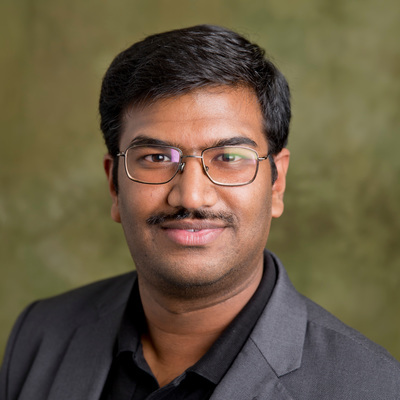
As a professor of electrical and computer engineering, researcher in signal processing, machine learning and artificial intelligence and leader in STEM education, Dr. Banavar brings a deeply integrated view of engineering’s future to the role of Academic Dean. Since joining Clarkson in 2014, he has built a record of excellence as a scholar, teacher, advisor and campus leader — combining advanced research with a strong commitment to student success, faculty support and hands-on, application-driven learning.
His work reflects the kind of engineering leadership Clarkson is known for: technically rigorous, human-centered and focused on real-world impact.
At a time when AI, machine learning, data systems and human-centered technologies are reshaping nearly every industry, Dr. Banavar’s appointment reflects Clarkson’s continued commitment to engineering education that is rigorous, relevant and responsive to the world students will enter after graduation.
As Academic Dean, Dr. Banavar will lead the faculty in advancing education and research that connect technical excellence with meaningful impact — empowering Clarkson engineers to build what’s next.

Departments
Research Leadership
At the intersection of AI, signal processing and human-centered technology, Dr. Banavar’s scholarship explores how information can be detected, interpreted and used across complex systems — from wireless sensor networks and source localization to behavioral biometrics and machine learning-enabled authentication.
His research interests include:
- Signal processing
- Machine learning and artificial intelligence
- Complex networks
- Cybersecurity
- Behavioral biometrics
- Continuous authentication
- STEM education
Through this work, Dr. Banavar contributes to technologies that can make digital systems more secure, intelligent and responsive. His publications include work on keystroke dynamics, facial recognition systems, source localization, sensor systems, sepsis prediction and STEM learning tools.
Championing STEM Education and Student Success
Dr. Banavar’s leadership extends beyond the lab. At Clarkson, he has served as Associate Director for Faculty Support with the Institute for STEM Education and has taught courses in digital signal processing, systems and signal processing, machine learning, detection and estimation theory, adaptive signal processing, signal processing applications, and digital control.
He has also contributed to university and departmental service through roles with Faculty Senate, assessment, financial review, ABET-related work and student organizations. His faculty advising has included groups such as IEEE-HKN Gamma Gamma Chapter, the IEEE Student Branch and K2CC Amateur Radio Society.
For Clarkson students, that means learning from a leader who understands engineering education from multiple angles: as a researcher, classroom teacher, mentor, advisor, program builder and accreditation leader.
Credentials
Dr. Banavar received his Ph.D. and M.S. in Electrical Engineering from Arizona State University and his B.E. in Telecommunications Engineering from Visvesvaraya Technological University in Karnataka, India.
| PhD | Electrical Engineering | Arizona State University | 2010 |
| MS | Electrical Engineering | Arizona State University | 2007 |
| BE | Telecommunications Engineering | Visvesvaraya Technological University | 2005 |
Dr. Banavar has been recognized for excellence in teaching, advising and graduate education.
Selected awards include:
- Clarkson University Outstanding Advisor Award, 2019
- Outstanding Teaching Award, Clarkson University HKN, 2015–2016
- Graduate Teaching Excellence Award, Graduate and Professional Students Association, Arizona State University, 2008–2009
- Inductee into the Inaugural Class of the HKN Advisors of Distinction
Dr. Banavar’s publications reflect the breadth of his work across artificial intelligence, machine learning, biometrics, signal processing, localization, healthcare technology and engineering education.
Selected recent publications include:
- D. Mahto, P. Yadav, M. Banavar, J. Keany, A.T. Joseph and S. Kilambi, “Development and validation of SXI++ large numerical model algorithm for sepsis prediction,” Journal of Medical Artificial Intelligence, 2025.
- C. Sahu, M.K. Banavar and J. Sun, “Data-Driven Nonlinear TDOA for Accurate Source Localization in Complex Signal Dynamics,” IEEE Sensors Journal, 2024.
- J. Križaj, R.O. Plesh, M. Banavar, S. Schuckers and V. Štruc, “Deep Face Decoder: Towards understanding the embedding space of convolutional networks through visual reconstruction of deep face templates,” Engineering Applications of Artificial Intelligence, 2024.
- C. Sahu, M. Banavar and S. Schuckers, “A novel non-linear transformation based multi user identification algorithm for fixed text keystroke behavioral dynamics,” IEEE Transactions on Biometrics, Behavior, and Identity Science, 2022.
- M.K. Banavar, S. Wickramasinghe, M. Achalla and J. Sun, “Ordinal UNLOC: Target Localization With Noisy and Incomplete Distance Measures,” IEEE Internet of Things Journal, 2021.
- B. Ayotte, M. Banavar, D. Hou and S. Schuckers, “Fast Free-Text Authentication via Instance-Based Keystroke Dynamics,” IEEE Transactions on Biometrics, Behavior, and Identity Science, 2020.
Dr. Banavar is also an inventor on patented technologies related to authentication, localization, wireless signals, distributed sensor networks and energy-efficient estimation.
Selected patents include:
- “System and method to authenticate users on a computing system using a free text behavioral biometric method,” U.S. Patent US20220245225A1, 2024.
- “Determining Localization from Ordinal Comparison Data,” U.S. Patent US11356805B2, 2022.
- “Localization using wireless signals,” U.S. Patent US10117051B2, 2018.
- “Distributed location detection in wireless sensor networks,” U.S. Patent US10028085B2, 2018.
- “Maximum likelihood localization in the presence of channel uncertainties,” U.S. Patent US9507011B2, 2016.
- “Energy efficient distributed estimation using nonlinear amplifiers,” U.S. Patent US9461676B2, 2016.
