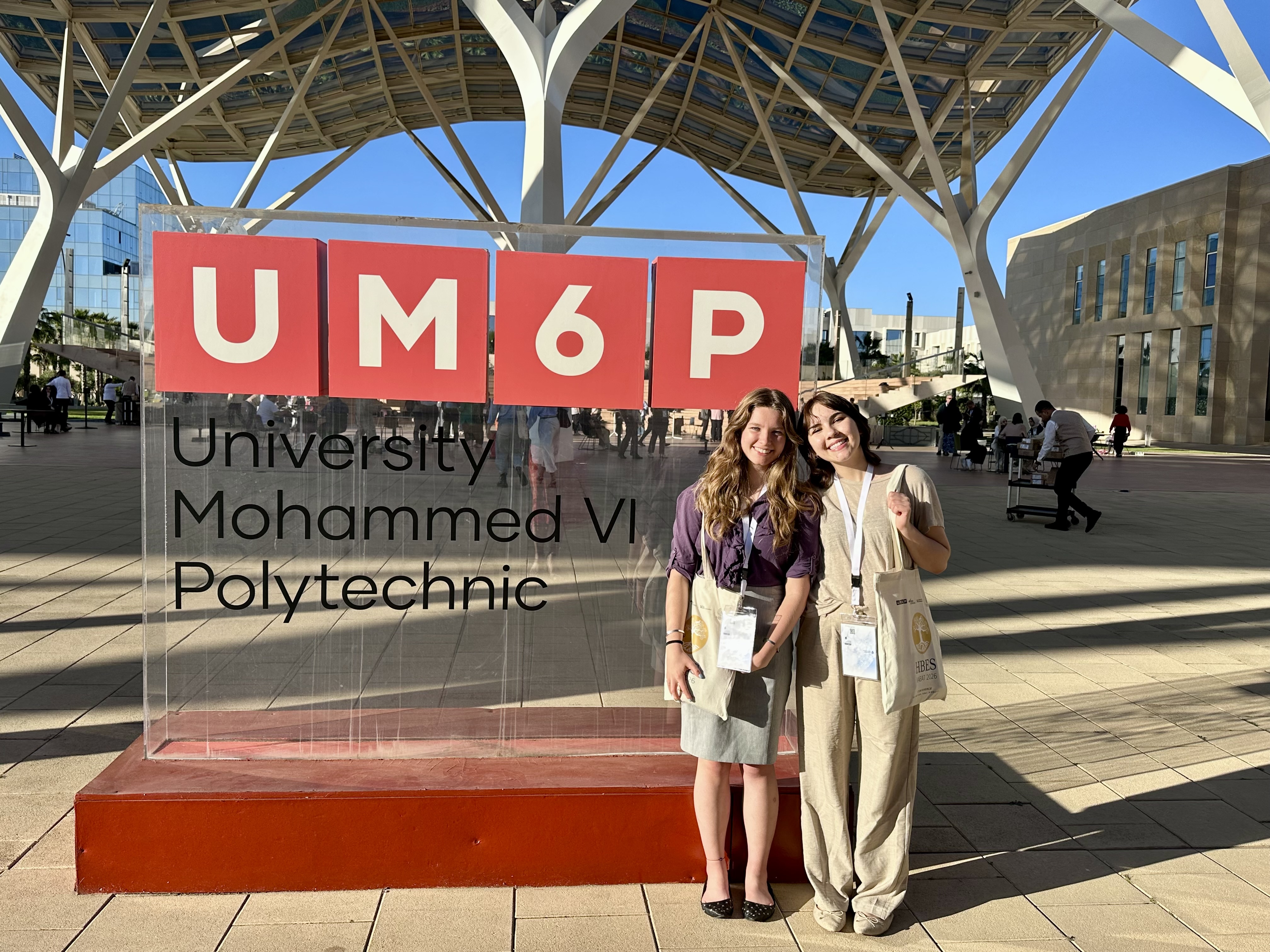
Clarkson Students Present Research at International Conference in Morocco
Clarkson University students Isabella Makdouli from Somerville, MA and Adrian Fowler, an Honors Student from Potsdam, NY recently presented research at an international conference in Morocco.
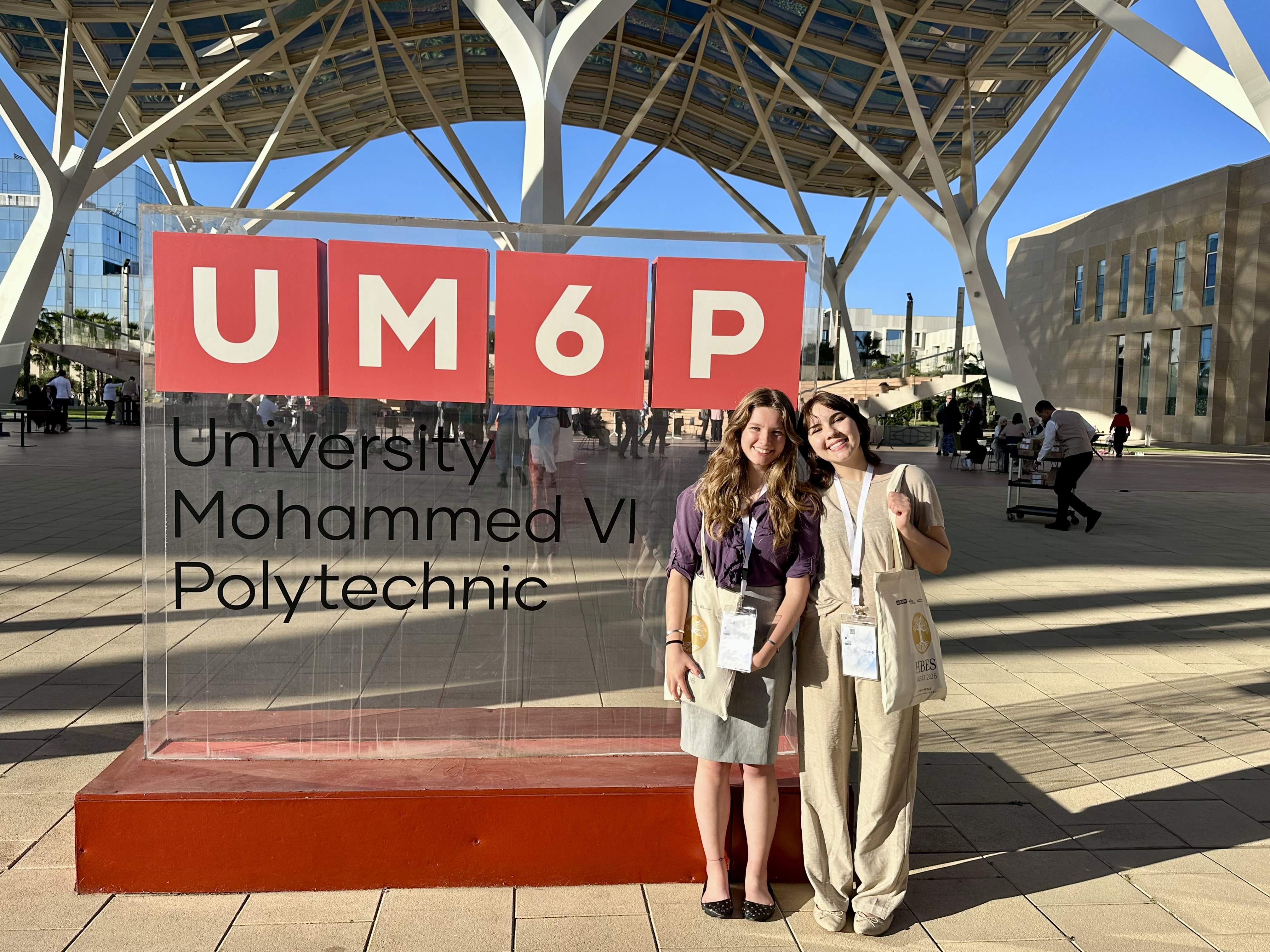
The students presented research at the annual Human Behavior and Evolution Society conference, examining how children and adolescents perceive patterns and randomness, with the goal of improving statistical literacy. The study, led by Clarkson University Psychology Professor Andreas Wilke, explored youths’ ability to identify, organize and recreate clumped, dispersed and random spatial patterns.
Using a two-dimensional grid task, researchers worked with participants ages 8 to 17. Participants sorted grids based on perceived randomness, identified the grid they believed was most random and created their own random patterns. After completing the initial activities, participants received a brief educational intervention explaining characteristics of truly random patterns before repeating portions of the task.
The research found that many adolescents naturally misinterpret random patterns, but their understanding improves following targeted instruction. The findings provide new insight into how pattern perception develops throughout childhood and adolescence and suggest that statistical reasoning can be strengthened through simple educational interventions.
“Children perceive patterns very differently throughout development, even from one year to the next, and differently than adults,” Makdouli said. “We found that many adolescents misinterpret random patterns, but a brief educational intervention helped improve their understanding. That shows statistical reasoning and pattern perception can be strengthened through targeted instruction.”
Makdouli said the project helped fill an important gap in existing research, which has historically focused on adults rather than younger populations.
The conference trip was supported by Clarkson’s Department of Psychology, the Lewis School of Health Sciences, and the Institute for STEM Education. Additional funding for Makdouli was provided by the Community of Underrepresented Professional Opportunities (CUPO), while Fowler received support through the Clarkson University Honors Program.