
Research Showcase: Biometric Bias
Facing Up: Improving Equity in Face Recognition Systems
In the face of biometric AI, our Center for Identification Technology Research (CITeR) is creating safety and equality for all.
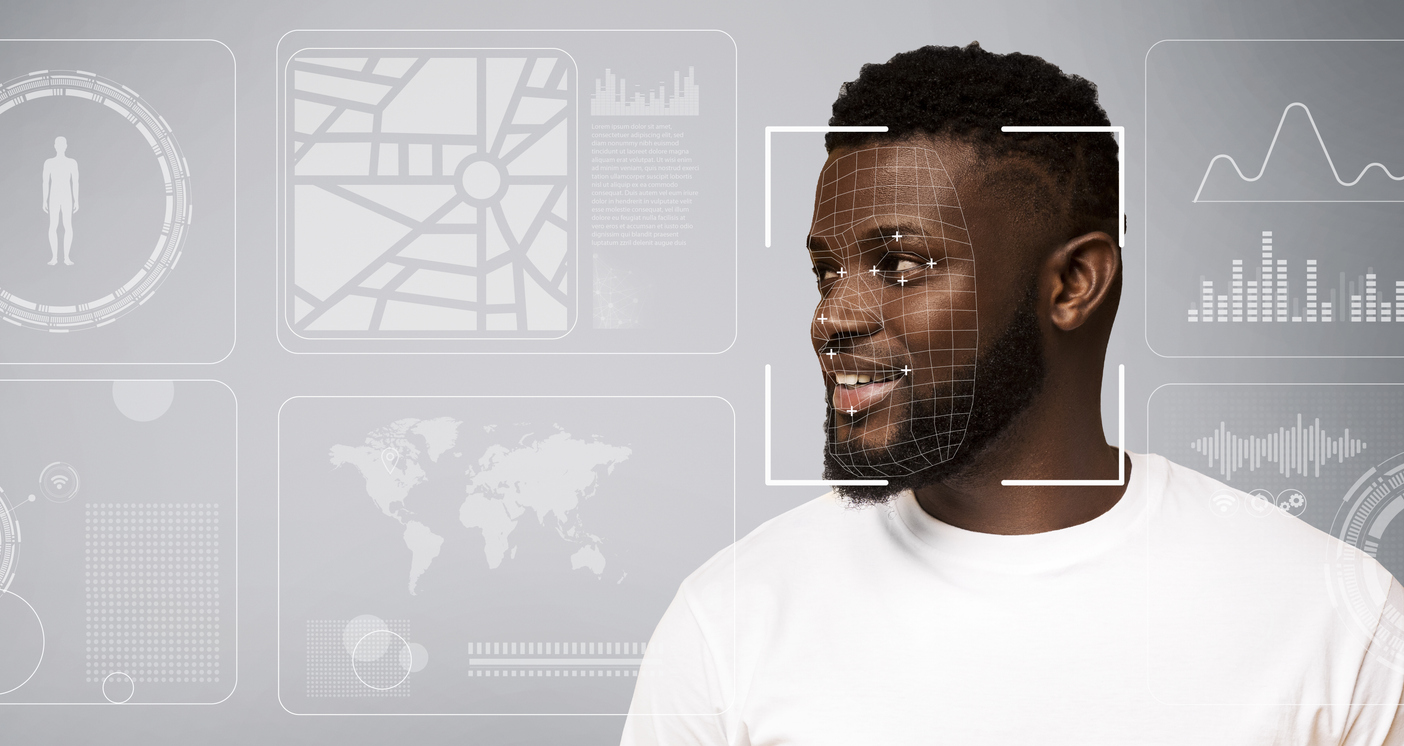
Chances are, you’re using Face Recognition (FR) technology in more and more situations every day. Powerful biometric technology that uses algorithms and AI to recognize faces at warp speed is revolutionizing modern life. This tech makes things like unlocking your phone or checking in at the airport a breeze. And it’s not just for security anymore — it's increasingly being used at places like stores, hospitals and banks. Sure, it’s exciting and convenient… But is it reliable? As Face Recognition continues to evolve and integrate into other aspects of life, research is needed to ensure that the technology is effective and equitable for everyone.
Clarkson faculty and student researchers are working to ensure Face Recognition technology is accurate and fair for everyone, regardless of demographics.
The Problem
Facial recognition technology raises important safety and equality concerns, especially regarding privacy and potential bias. Studies have shown that these systems can be less accurate for people of color, women, and certain age groups, leading to concerns about fairness and misidentification. As facial recognition becomes more widespread in areas like law enforcement, healthcare and education, the consequences of this bias could become even more significant. Ensuring fairness and transparency in how the technology is developed and used is crucial to addressing these concerns.
The Purpose
This research aims to create methods for mitigating bias in Face Recognition technology, thus ensuring fairness for all demographics across a variety of systems.
The Methods

Establish accurate metrics
Establish a continuous skin color metric that retains accuracy across different image acquisition environments.

Measure equity
Develop a statistical approach to measure equity, ensuring FR results fall within a precise margin of error.
Enhance technology
Employ new FR systems in combination with or instead of existing measures to minimize bias of results.
We think of fairness as meaning that the rates of false non-matches are not statistically different across one or more demographic categories. The method involves measuring the error rates within and across different demographic groups, then building a distribution of the maximal variation for the overall error rate.
Dr. Stephanie Shuckers, CITeR Director
Why this research matters
80%
of Americans are concerned about the privacy implications of facial recognition technology
as reported by Pew Research
In the United States, more than half of the nation's adults — over 117 million people — are included in facial recognition networks used by law enforcement agencies (Georgetown Law's Center on Privacy & Technology).
As of 2023, 97% of airports and 76% of airlines have made investments in biometric technologies, including facial recognition, for passenger identity management (SITA).
The Research Team
This research is a project of the Center for Identification Technology Research (CITeR), a National Science Foundation (NSF) Industry/University Cooperative Research Center (IUCRC) focused on serving its affiliates in the rapidly growing areas of identity science and biometric recognition.
Since 2011, Clarkson University has been the lead site for CITeR, spearheading research in Clarkson’s focus area of Computational and Data-Enabled Discovery. Their team is an interdisciplinary group of faculty, researchers and students, all working together to drive innovations in business intelligence, financial technology and artificial intelligence.
Bringing the research to life
CITeR is working with The International Organization for Standardization (ISO), FIDO Alliance, and independent laboratories worldwide to implement a certification program that establishes performance requirements for biometric recognition technology – helping to ensure fairness and equity among demographic subgroups based on age, gender and skin tone.
Image

Image

Related news + articles
Let's innovate together.
Clarkson University faculty and students are working together to find solutions for a more equitable world. Join us.
Board of Trustees Chair
Board of Trustees Chair's Page
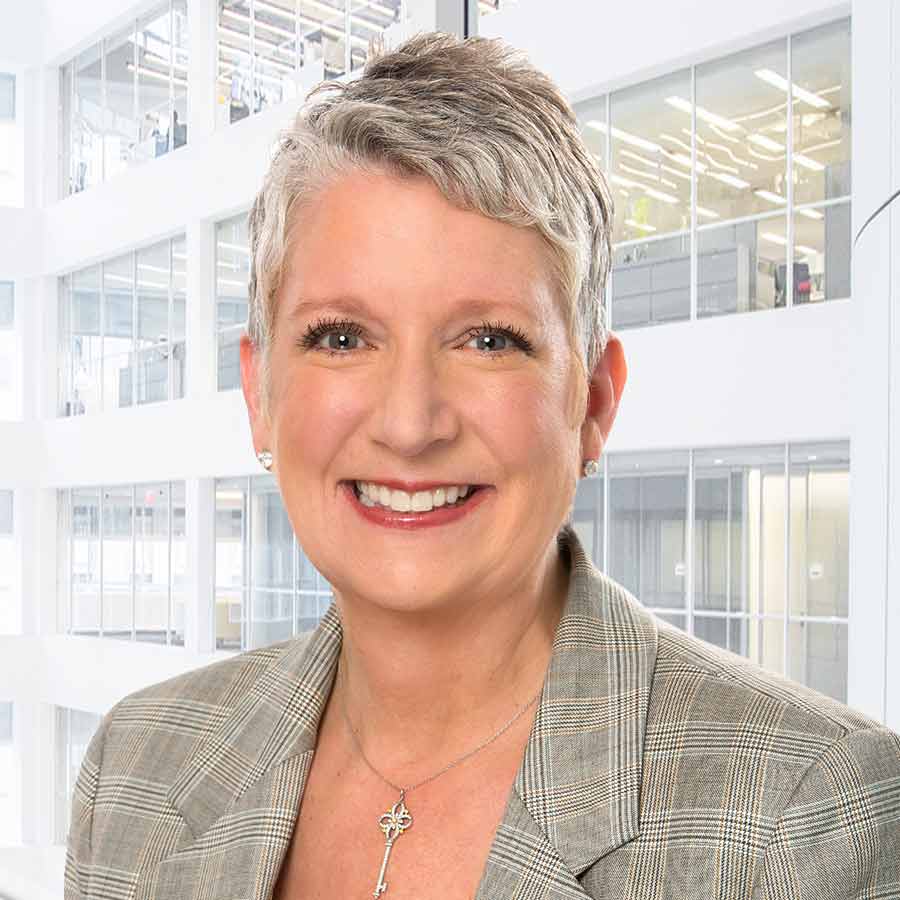
The 24th Chair of Clarkson University’s Board of Trustees, Nancy D. Reyda ‘81
Nancy D. Reyda is a distinguished industry leader, having held senior roles in both the financial services and oil and gas sectors. She retired in August 2022 as Managing Director and Chief Operating Officer of Global Operations and Technology for Bank of New York Mellon where she was responsible for all business and operating aspects of the global operations and technology organization. Prior to joining BNY Mellon, Nancy held several senior management roles at Bank of America, Deutsche Bank, Goldman Sachs and Lehman Brothers (now Barclays Capital).
Image
Nancy spent her early career at Chevron, where she served for over 20 years managing various downstream businesses and functions. She also led strategic enterprise initiatives, including Chevron’s start-up company RMX and aspects of the ChevronTexaco downstream merger. Reyda left Chevron in 2004 to join the turnaround team at Gap Inc. and spent three years in various retail management positions there, before joining Lehman Brothers.
First elected to the Clarkson University Board of Trustees in October 2010, Nancy has served as its Vice Chair and Secretary and on various committees, including the External Affairs, Executive, Audit, Development and Compensation Committees. In 2016, she received the Golden Knight Award for her outstanding engagement with Clarkson. Nancy is passionate about cancer research and is a Trustee on the American Association for Cancer Research Foundation Board. Nancy is also a board member of the Think Forward Foundation.
Nancy earned a Bachelor of Science degree in Chemical Engineering from Clarkson University in 1981. As a student, she was President of Phalanx, Clarkson’s highest Leadership honorary society, and a member of Tau Beta Phi Engineering Honor Society and Zeta Gamma Sigma Sorority. Originally from Irondequoit, New York, Nancy and her husband Steve – also from the Clarkson Class of 1981 – have two adult sons. In retirement, they reside in Denver, Colorado near their son Stephen and his family, and in Alamo, California near their son Thomas and his family. Nancy and Steve enjoy family time with their four grandchildren, winemaking, golf and travel.
Faculty Research Showcase
Faculty Research Showcase
Facing Up: Improving Equity in Face Recognition Systems
How Clarkson’s Center for Identification Technology Research (CITeR) is creating safety and equality for all in the face of biometric AI
The Road to Sustainability: Transforming the Power Grid for Renewables and Electrified Transit
By addressing the challenges of grid modernization, renewable integration and electric vehicle infrastructure, we're paving the way to a greener future.