Image
The brain shapes how we think, learn, feel and behave. Understanding it takes more than one scientific perspective.
Clarkson’s Bachelor of Science in Neuroscience brings together biology, psychology, chemistry and computational science to help you explore the brain from molecules and cells to cognition and behavior. You’ll build the scientific knowledge, quantitative skills and research experience to investigate complex questions about the nervous system and apply what you learn to challenges in health, technology and society.
Neuroscience does not fit neatly into one field, and neither does Clarkson’s program. You’ll study the brain through multiple lenses while developing a strong foundation in the biological, psychological and computational principles behind brain function and behavior.
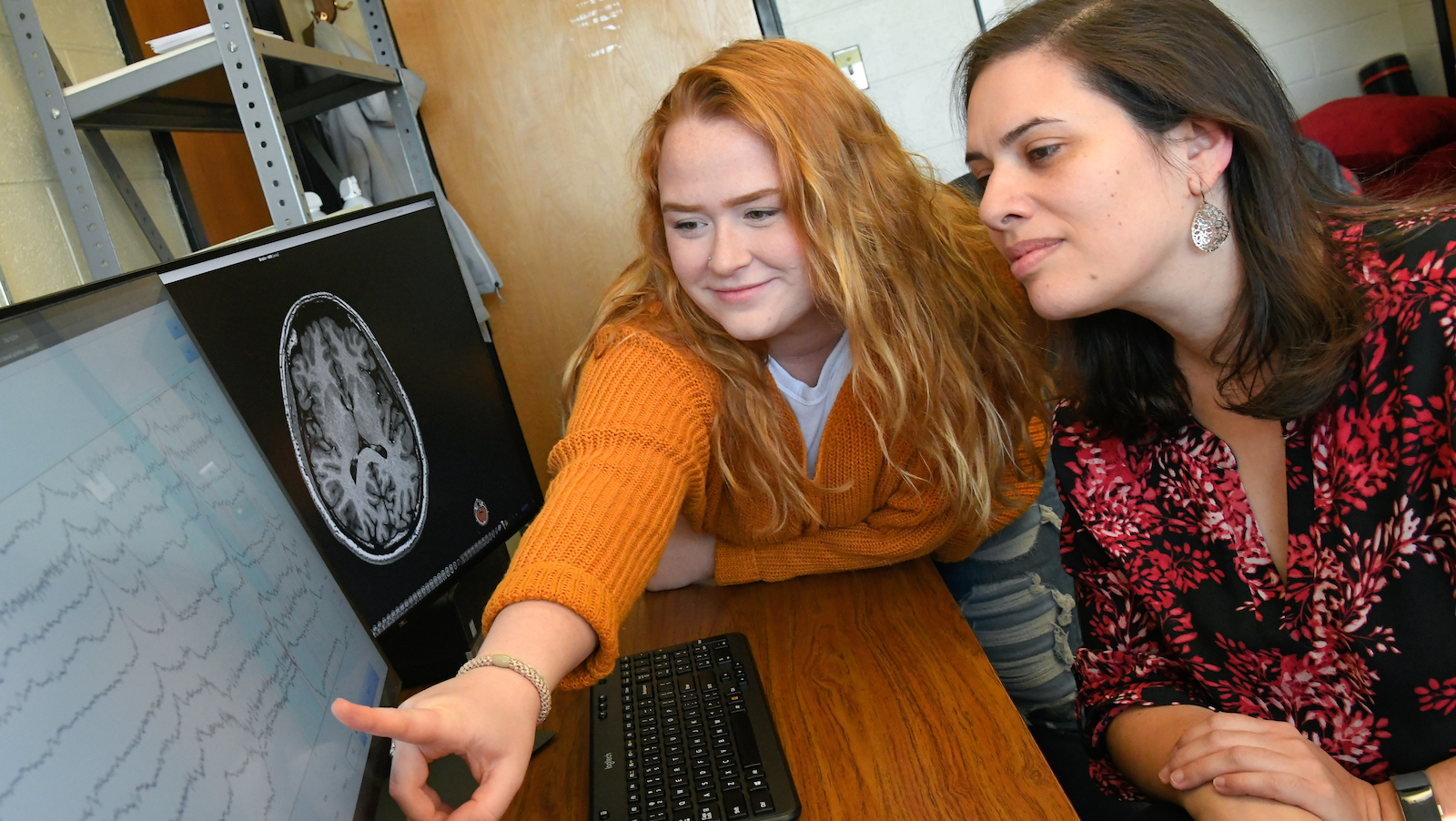
Experiential learning is built into the degree. Every neuroscience student completes at least one semester of directed laboratory research or a senior thesis. Working alongside faculty, you’ll learn how to form research questions, design experiments, analyze neural and behavioral data and communicate what you discover.
You can also shape the program around your interests. Choose a specialization in cognitive science, neurobiology or computational neuroscience, or build a broader path through the general neuroscience track. Whether you are drawn to medicine, mental health, biotechnology, artificial intelligence or brain-computer interfaces, you’ll graduate ready to keep exploring.
Neuroscience students investigate the nervous system across multiple levels of analysis, from molecular and cellular processes to neural systems, cognition and behavior. Along the way, you’ll strengthen your ability to think critically, evaluate scientific evidence and approach complex questions with curiosity and care.
For more information, view the course catalog for current program requirements, course numbers and credit hours.
The B.S. in Neuroscience combines foundational coursework in psychology, biology, chemistry, physics and mathematics with core neuroscience courses, computational training, a specialization track and an undergraduate research experience. All courses are 3 credits unless otherwise noted.
The following courses are required for all students, regardless of their program of study:
Choose one statistics course:
Choose one research or modeling course:
PY456 is recommended for students pursuing the cognitive science track. Linear algebra, MA330 or MA339, is also recommended for students pursuing the computational neuroscience track.
Every neuroscience student completes at least one semester of directed laboratory research or a senior thesis. Options include:
Choose at least two courses from one of the following tracks.
Cognitive Science
Neurobiology
Computational Neuroscience
General Neuroscience
Choose any two approved neuroscience electives from the cognitive science, neurobiology and computational neuroscience tracks.
Build a neuroscience degree that matches the questions you want to answer by selecting a specialization track that meets your career goals.
Explore how the brain supports perception, learning, memory, decision-making and other mental processes. This track is a strong fit if you are interested in cognition, behavior, mental health or clinical psychology.
Examine the nervous system at the molecular, cellular and systems levels. This track can prepare you for paths in medicine, biomedical research, biotechnology, pharmaceuticals and other health professions.
Use mathematics, computer science and machine learning to study neural systems and interpret complex data. This track is designed for students interested in artificial intelligence, neuroengineering, biomedical signals, data science or brain-computer interfaces.
Combine approved electives from across the program to create a broader interdisciplinary path based on your interests and goals.
Take neuroscience beyond the classroom through an internship, co-op or other professional experience. Depending on your interests, you could pursue opportunities in healthcare, mental health, biomedical research, biotechnology, pharmaceuticals, data science or emerging neurotechnology.
Clarkson’s Career Center can help you explore opportunities, prepare application materials and connect your academic interests with a professional path. You can also work with faculty to identify research-based experiences that support your goals for graduate school, professional school or industry.
Learn more about career development and internships at Clarkson.
Research is a required part of the neuroscience major. You’ll spend at least one semester working in a lab or completing a senior thesis, putting scientific methods into practice as you investigate questions about the brain and behavior.
Depending on your interests, you may study topics such as cognition, perception, learning, memory, psychophysiology, neural development, social cognitive neuroscience or the analysis of neural and behavioral data. You’ll work closely with faculty as you develop a research question, collect and interpret evidence and communicate your findings.
Your experience may also prepare you to present at a conference, contribute to a publication or continue your research in graduate school.
Our faculty research interests include:
Study the mechanisms that guide processes like attention, memory, perception and emotion. This minor is ideal for students interested in clinical health careers, such as medicine, physical therapy, clinical psychology and neuropsychology. Learn more about the cognitive neuroscience minor.
Build a strong foundation in biology while pursuing another major at Clarkson. This 20-credit minor explores areas such as genetics, ecology, microbiology and physiology through core courses, advanced electives and hands-on laboratory experience. Learn more about the biology minor.
To understand human cognition, social behavior and social organization, you need a background in multiple disciplines. This minor provides a foundation in biology, psychology and social science, so you can join the discussion. Learn more about the biology, behavior and society minor.
The best healthcare practitioners are more than technically proficient. They're also keenly aware of ethics, history and other perspectives on their profession. Get insights that will prepare you for what awaits in the field while gaining invaluable hands-on experience. Learn about the medicine and healthcare minor.
Psychology minors develop the critical skills of problem-solving and communication. These skills include being able to formulate a problem; acquiring the information needed to solve the problem, either through researching the existing literature or designing methods to collect new data; analyzing and interpreting the information; integrating the information and applying it to the problem; and communicating the solution to others. Learn more about the psychology minor.
A neuroscience degree can take you in many directions. If you're interested in pursuing a career in the health sciences or healthcare, we'll work with you to ensure you're going the right way. Each semester, faculty advisors will help you choose classes and activities that can make it easier to get into graduate programs. The departmental neuroscience curriculum is so flexible that it provides an ideal starting point for students who want to double major (e.g., degrees in neuroscience and psychology, neuroscience and healthcare, or neuroscience and biology) within their regular course load.
Available advising tracks include:
Clarkson’s professional partnerships with local psychiatric and mental health facilities give undergraduates the rare opportunity to observe clinical work and supportive care in professional and community-based settings.
Throughout a semester, participating students may spend a full day each week, or the equivalent, at a local partner site. They work alongside psychiatrists, psychologists, social workers, peer support staff and other members of mental health teams while learning how knowledge of the brain and behavior connects to patient care.
Few, if any, undergraduate neuroscience programs offer students this level of professional immersion and clinical experience.
Participating students may observe or support areas such as:
At internship sites, students learn by observing professionals and support staff as they provide care and discuss treatment or intervention plans. Depending on the placement, students may also take part in clinical and support activities while receiving guidance and feedback from site professionals and Clarkson faculty.
More about our professional partnership with the St. Lawrence Psychiatric Center
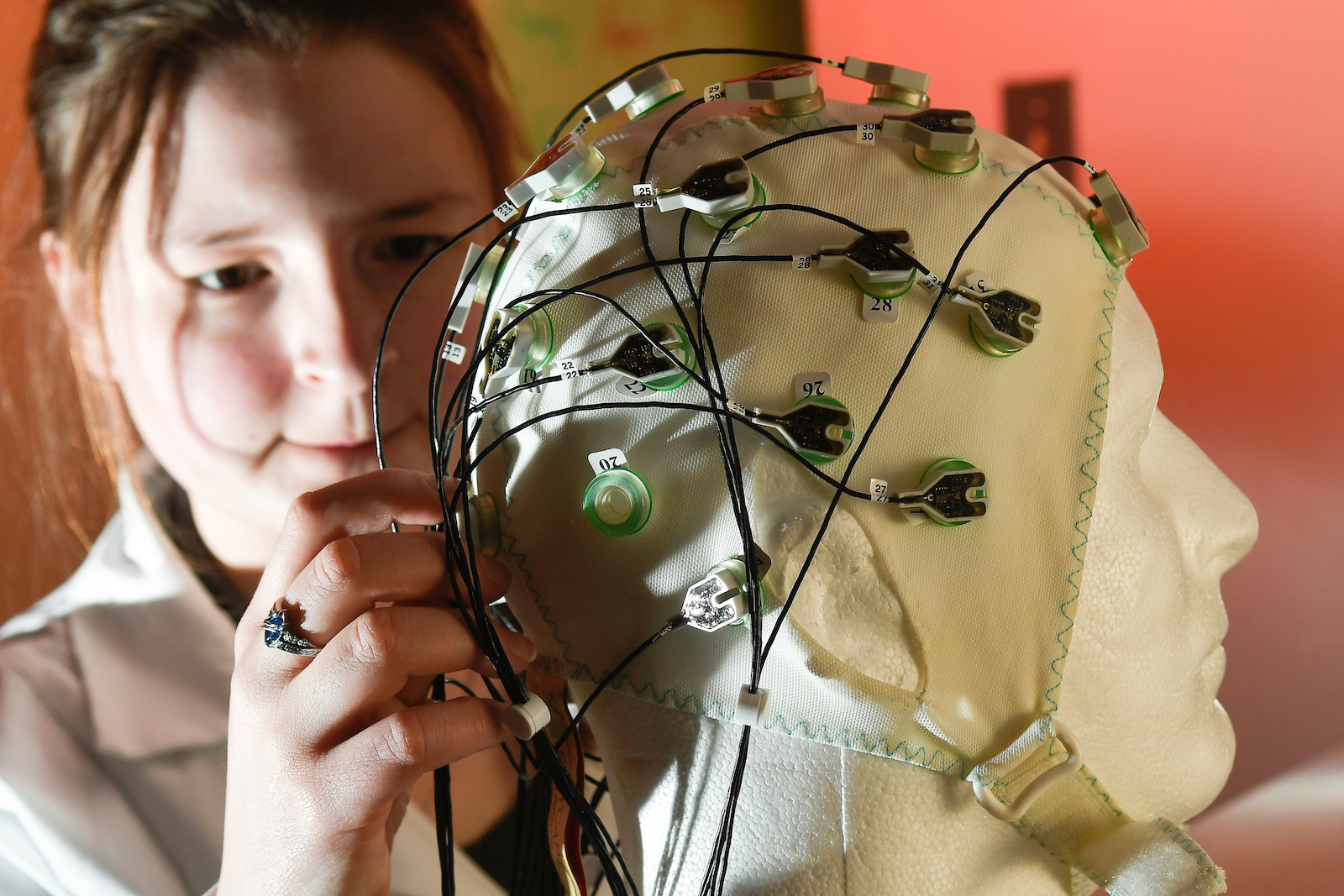
How does the brain focus attention? What shapes the way we learn and remember? How do emotion, motivation and social experience influence the mind and body? In Clarkson’s specialized labs, you can help investigate questions like these while building practical research skills.
Labs include:
Students interested in the biological and computational sides of neuroscience may also find research opportunities with faculty across psychology, biology, engineering and computational science.
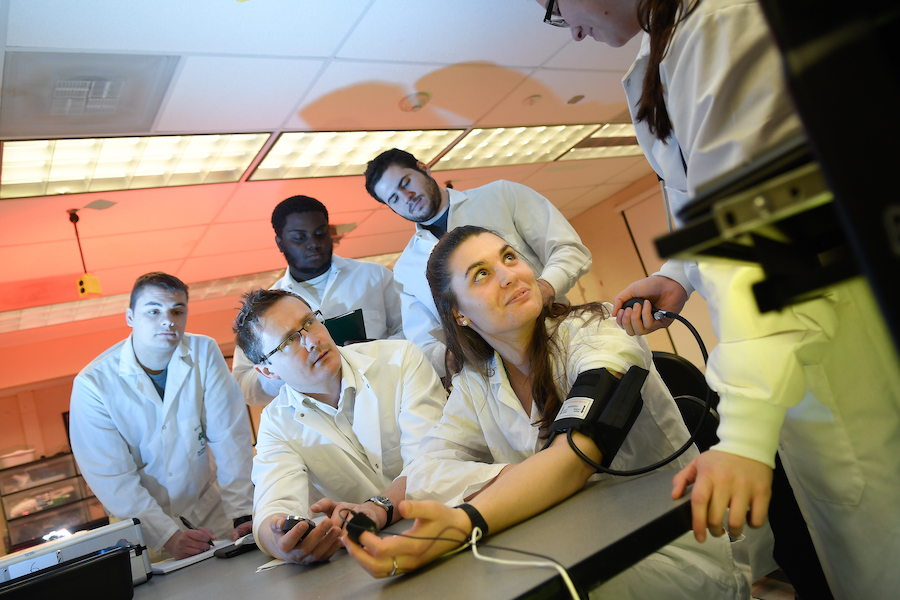
A neuroscience degree can prepare you to work at the intersection of science, health and technology. The research, data analysis, communication and problem-solving skills you develop can support careers in healthcare, biomedical research, biotechnology, pharmaceuticals, public health, data science and emerging neurotechnology.
Some careers require graduate or professional education. Possibilities include:
Neuroscience graduates may continue their education in programs such as:
Bring together biology, psychology and computational science to explore one of the most complex systems we know. At Clarkson, you’ll build the research experience, quantitative skills and scientific perspective to take your next step toward a future in health, discovery or technology.