Clarkson University Study Uses Virtual Reality to Improve Walking Balance Assessment
A new study led by Clarkson University Associate Professor of Physical Therapy Kwadwo Appiah-Kubi introduces a virtual reality tool that could help clinicians better evaluate walking balance and detect balance problems before they lead to falls.
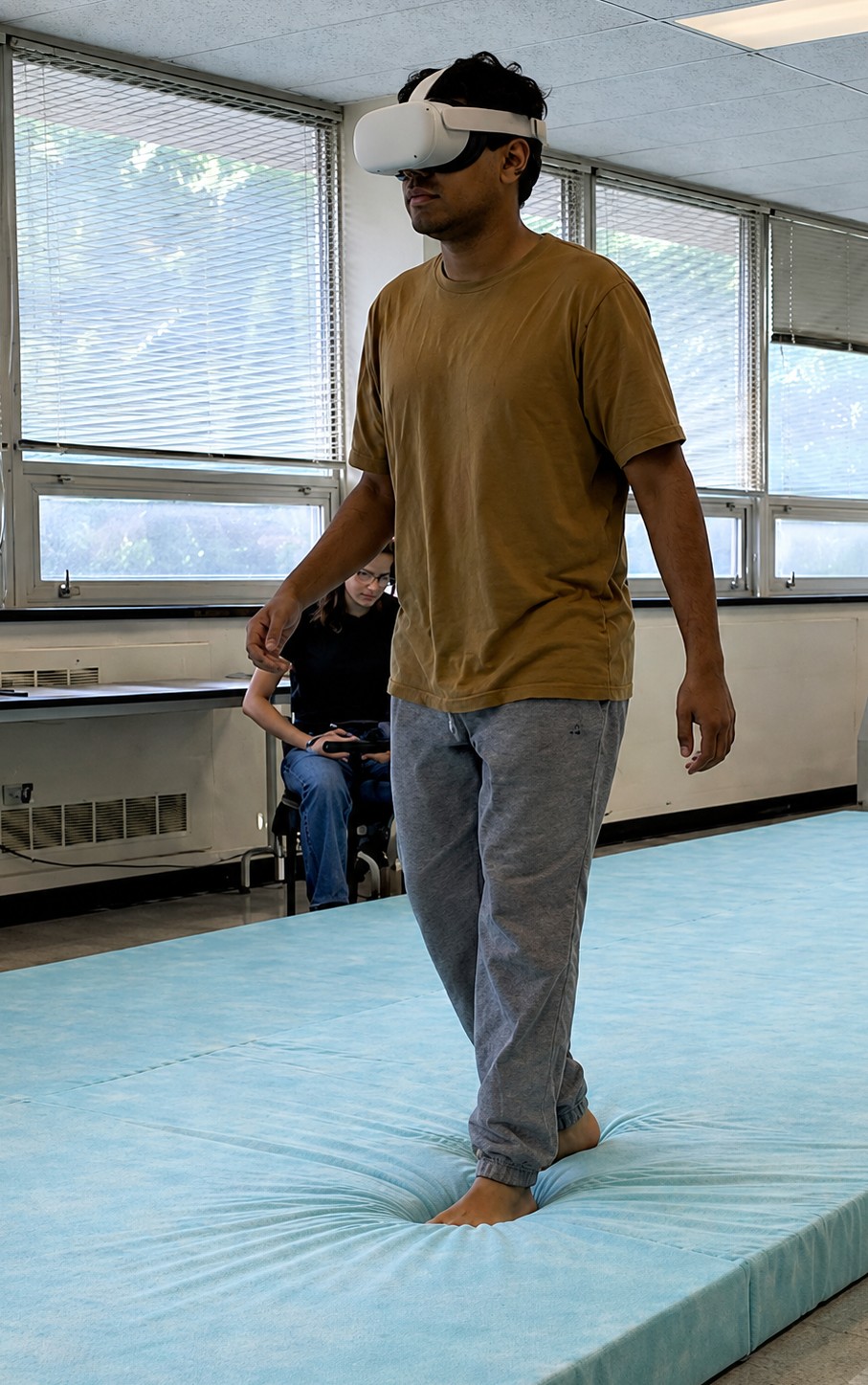
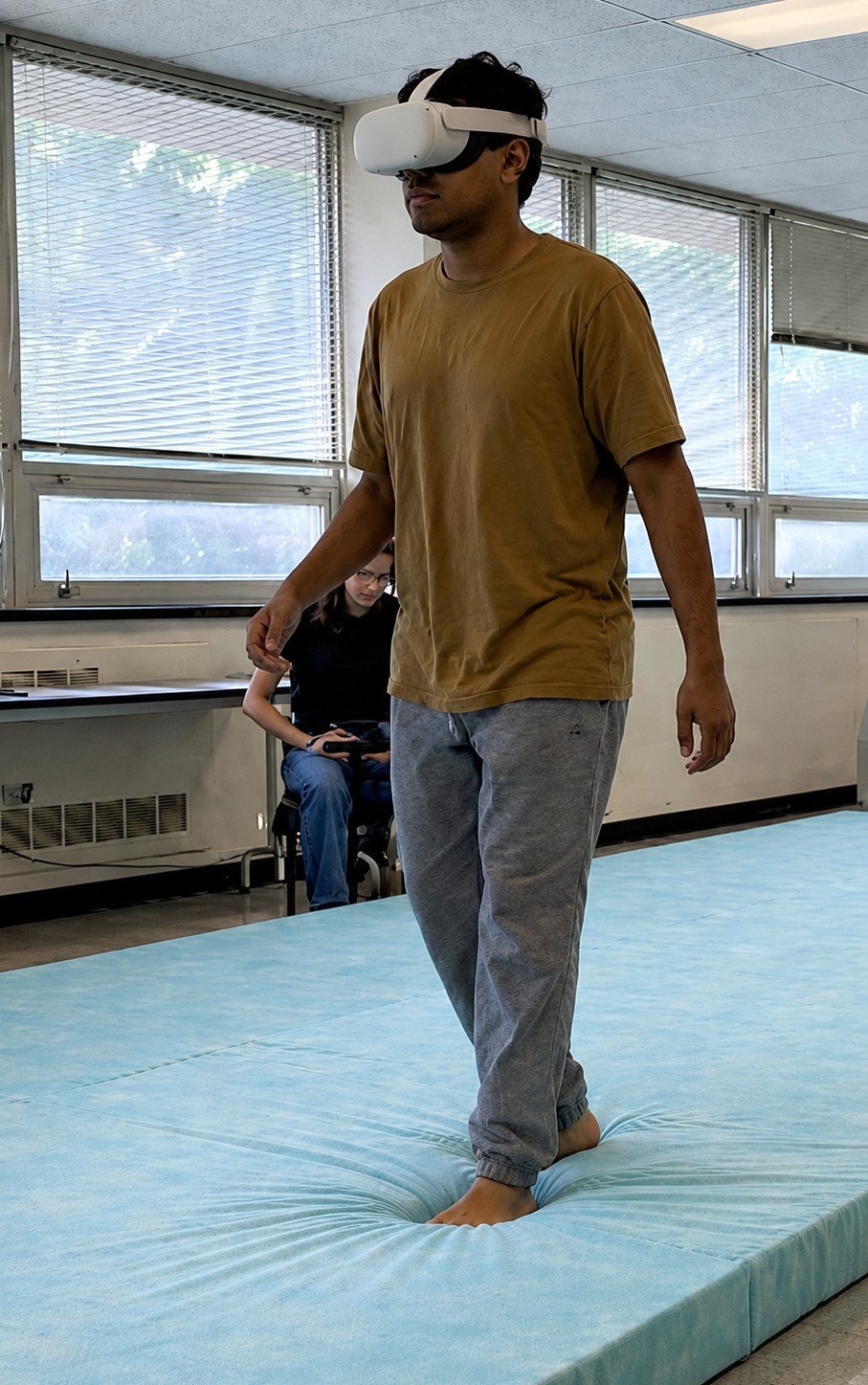
Published in the journal Methods and Protocols, the study presents the Gait Sensory Interaction Test, or GaitSIT, a portable, low-cost system that uses virtual reality to measure how the body relies on vision, the inner ear and sensations from the feet and legs to maintain balance while walking.
Current clinical balance tests primarily measure a person's ability to stand still. The GaitSIT instead evaluates balance during walking by changing both the walking surface and the visual environment.
Study participants walked across firm and foam surfaces while wearing a Meta Quest virtual reality headset that displayed stable, dark and rotating scenes. The system continuously tracked head movement to measure how balance changed under different conditions.
The study included 29 healthy young adults who completed walking tests in six different sensory conditions. Researchers found that the system consistently detected changes in walking balance as conditions became more challenging while producing reliable results across repeated testing sessions.
Appiah-Kubi said the research addresses a longstanding need in rehabilitation. While clinicians have effective ways to evaluate the sensory systems involved in standing balance, practical tools for assessing those same systems during walking have been limited. By combining consumer-grade virtual reality technology with motion tracking, the GaitSIT offers an affordable and portable approach that could be used in clinical settings.
Researchers believe the technology could eventually help identify balance problems earlier, guide more personalized rehabilitation programs and improve fall-risk screening for older adults and people with neurological conditions, including stroke, Parkinson's disease, multiple sclerosis and disorders affecting the inner ear. This initial study demonstrates the system's feasibility and lays the groundwork for future studies involving older adults and clinical populations.
The interdisciplinary research team included Clarkson faculty and researchers from the physical therapy, computer science, electrical and computer engineering, and business programs. The study represents an important step toward making advanced walking balance assessments more accessible outside specialized research laboratories.