Clarkson University Researchers Offer New Guidelines to Turn Water Sensing Innovations into Real-World Impact
A new scientific perspective offering a clear roadmap for turning advanced water-sensing technologies into practical tools for communities worldwide has been named Best Feature/Perspective by Environmental Science & Technology (ES&T), a leading journal in environmental research.
The publication—co-authored by Silvana Andreescu, the Egon Matijevic Endowed Chair in Chemistry at Clarkson University—adresses on one of today’s most urgent challenges: ensuring water quality and safety as new contaminants continue to emerge. These contaminants pose serious risks to human health and the environment, yet methods to detect them early and at their source remain limited in availability and use. The Andreescu lab at Clarkson has been developing sensors for water contaminants for many years and is actively working to translate these technologies into real world solutions.
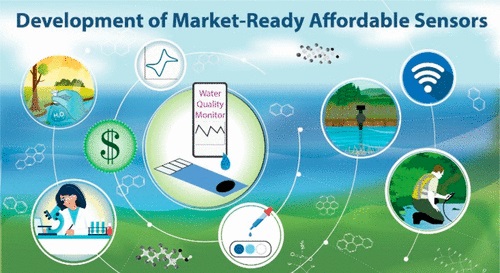
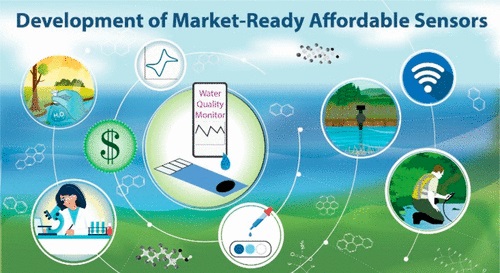
The perspective explains how low-cost, field-deployable sensors can make water testing faster, easier, and more accessible, allowing for large-scale monitoring and better water quality management, while also highlighting the obstacles that prevent these tools from reaching the market. Barriers such as high costs, challenges with real-world deployment, and limited involvement of end users in sensor design often stop promising ideas at the prototype stage and ultimately hinder widespread adoption.
The perspective outlines strategies to improve sensitivity, selectivity, robustness, and performance in real-world water environments. It also highlights the need to design with end users in mind—integrating cost considerations, community needs, and clear actionability into early development.
Other key recommendations include establishing standardized testing and validation methods, increasing collaboration between universities and industry, improving data sharing, and strengthening workforce training. Together, these guidelines offer a blueprint for faster, more effective development and translation of water quality sensors.
While the recognition from ES&T underscores the importance of this work, the key goal is real-world impact—advancing technologies that help communities track and manage water contamination, supporting healthy ecosystems and public health.
The full perspective can be accessed through Environmental Science & Technology.