Clarkson University Researchers Develop Clean Plasma Technology to Produce Sustainable Fertilizer in New York
Clarkson University scientists are developing a clean-energy fertilizer production method that could help New York farmers lower emissions, strengthen local supply chains and reduce costs. The research uses plasma technology to convert air, water and electricity into a nitrogen-rich solution that can be applied directly to crops, offering a sustainable alternative to today’s fossil fuel-intensive fertilizer manufacturing.
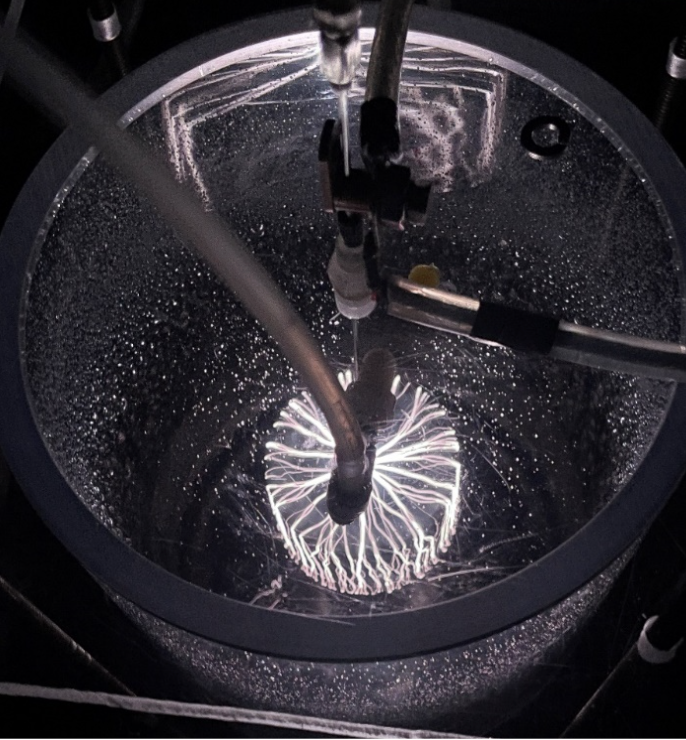
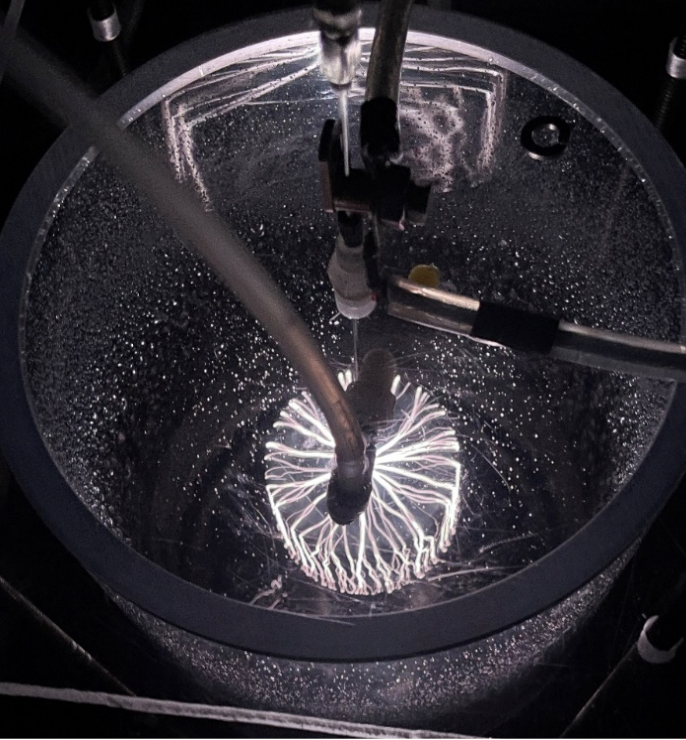
Clarkson’s project focuses on scaling up a non-thermal plasma spinning-disc reactor that produces plasma-activated water (PAW). PAW contains nitrogen available for immediate uptake through roots and leaves, enabling farms to generate fertilizer on-site. New York farms currently rely on nitrogen fertilizer produced with fossil fuels and transported up to 2,000 miles, contributing to 47 percent of the state’s greenhouse-gas emissions.
“This technology has the potential to transform fertilizer production from a global supply chain into a local, low-emission process,” Selma Mededovic Thagard, the Richard and Helen March Professor in Clarkson’s Department of Chemical & Biomolecular Engineering. “It’s about creating practical solutions that support farmers while protecting the environment.”
The Clarkson team will develop a farm-scale reactor prototype, conduct a lifecycle analysis and test PAW effectiveness on New York crops such as tomatoes and lettuce. The work aims to demonstrate that on-farm fertilizer generation can significantly reduce carbon footprints, lower nitrogen runoff and decrease economic vulnerability for rural and smaller farms.
The project, led by Mededovic Thagard and Thomas Holsen, Jean S. Newell Distinguished Professor of Engineering and Co-Director of CAARES, is one of seven statewide initiatives selected for funding through the New York State Pollution Prevention Institute’s (NYSP2I) 2025–26 Research and Development Program. NYSP2I awarded $650,000 this year to support practical, near-term sustainability solutions that help New York businesses reduce their environmental impact while improving economic competitiveness.
NYSP2I’s annual R&D program supports applied research that validates and expands proven sustainability concepts. Faculty and staff from NYSP2I’s partner institutions—Binghamton University, Clarkson University, Cornell University, Rensselaer Polytechnic Institute and Rochester Institute of Technology—are eligible for competitive awards of up to $100,000.
Funded by the New York State Department of Environmental Conservation, NYSP2I works to make the state more sustainable for workers, the public and businesses through pollution-prevention initiatives, technical assistance and technology development.