Clarkson University Announces Spring 2026 Science Café Series in Potsdam
Clarkson University will host a new slate of Science Café talks this spring, inviting the North Country community to explore cutting-edge science and technology in an informal and engaging setting. The free public events will be held at 7:15 p.m. in the Potsdam Civic Center Community Room, 2 Park Street, bringing together researchers and community members for accessible conversations about discoveries shaping our world.
Clarkson’s Science Café series is designed to make science approachable and relevant by creating a relaxed environment where experts share their work through short presentations followed by open discussion with attendees. These gatherings connect local residents with university researchers while highlighting the wide range of scientific inquiry taking place at Clarkson and across the region.
Upcoming Science Café Events
Retraining Balance: How the Brain Keeps Us Upright
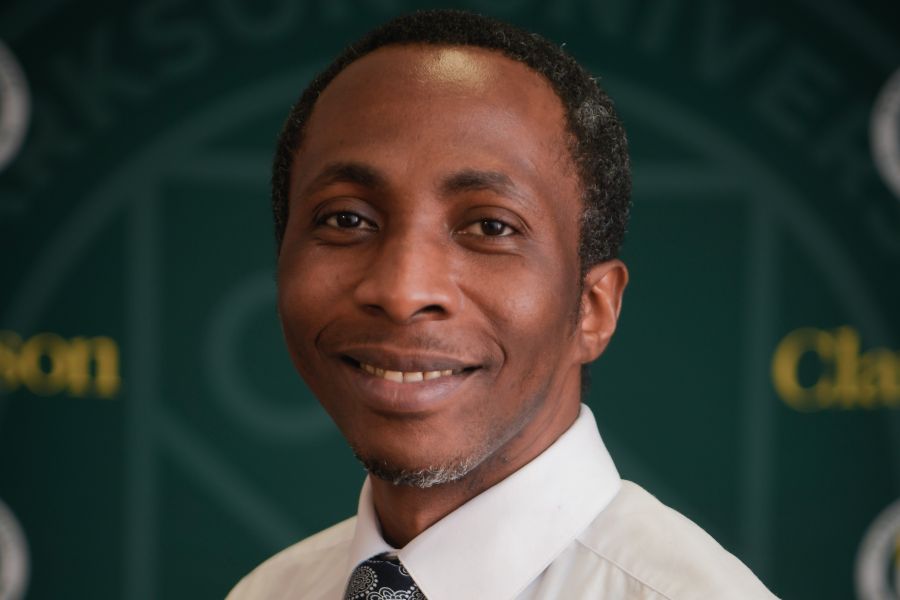
March 25, 2026 | 7:15 p.m.
Speaker: Kwadwo Appiah-Kubi, Associate Professor of Physical Therapy, Clarkson University
Maintaining balance may appear effortless, yet it relies on constant communication between the brain, inner ear, eyes, and muscles. When this system is disrupted—by aging, stroke, or neurological conditions—individuals may experience instability and an increased risk of falls, one of the leading causes of injury and loss of independence among older adults.
In this talk, Dr. Kwadwo Appiah-Kubi will explain how the brain integrates sensory signals from vision, the vestibular system, and proprioception to maintain stability during everyday activities like walking. He will also discuss emerging research on concurrent vestibular and postural training, a novel rehabilitation approach aimed at improving how the brain processes sensory information during movement.
The presentation will also introduce the Gait Sensory Interaction Test (GaitSIT), a new low-cost virtual reality–based assessment that measures how different sensory systems contribute to balance while walking. The research highlights how advances in neuroscience and physical therapy could improve fall prevention, rehabilitation, and mobility across the lifespan.
From Black Holes to Dead Stars: Probing the Cosmic Graveyard with Gravitational Waves
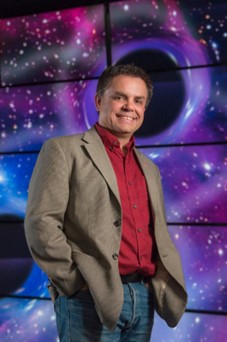
April 8, 2026 | 7:15 p.m.
Speaker: Shane L. Larson, Department of Physics, Clarkson University
For centuries, nearly everything astronomers have learned about the universe has come from studying light. Today, however, scientists are exploring the cosmos through entirely new messengers—including subatomic particles and ripples in spacetime known as gravitational waves.
Dr. Shane L. Larson will guide audiences through this emerging frontier of astronomy. Gravitational waves allow scientists to observe some of the most extreme events in the universe, including the collision of black holes, the violent collapse of stars in supernova explosions, and the gradual orbital dance of binary white dwarf stars.
The talk will explore what gravitational waves are, how scientists detect them, and what the growing catalog of discoveries reveals about the universe. Dr. Larson will also discuss the exciting prospects for gravitational-wave astronomy in the coming decade.
The Magic of Large Language Models
April 15, 2026 | 7:15 p.m.
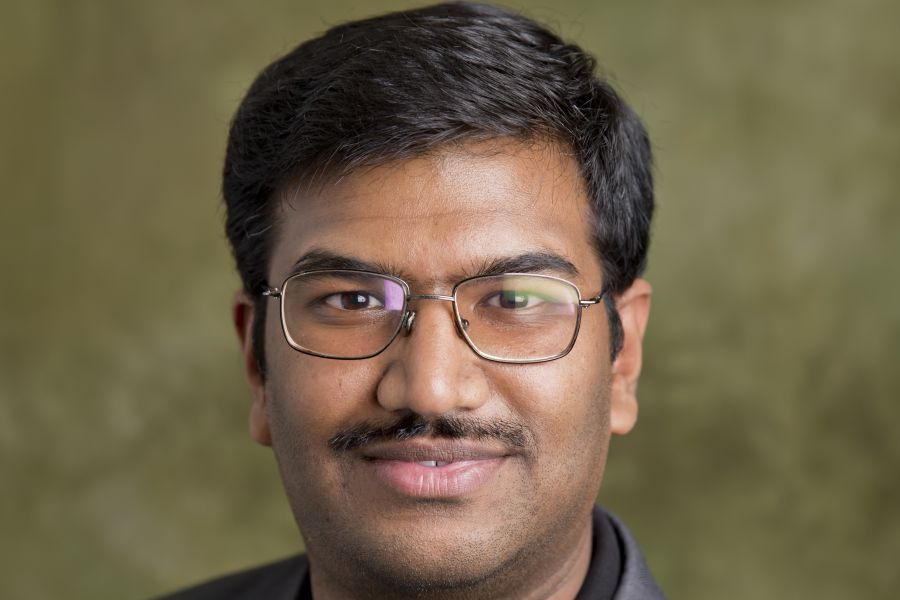
Speaker: Mahesh Banavar, Professor of Electrical and Computer Engineering, Clarkson University
Generative artificial intelligence has rapidly evolved from a digital curiosity into a transformative technology shaping how people work, communicate, and create.
In this accessible and non-technical presentation, Dr. Mahesh Banavar will explore the “magic” behind tools such as ChatGPT. The talk will explain how large language models process text and generate human-like responses, and how these systems have expanded beyond language into music, images, and other forms of digital creativity.
Dr. Banavar will also discuss how advances in generative AI have turned these models from “auto-complete on steroids” into sophisticated digital agents capable of interacting with tools and performing complex tasks. The presentation will provide a clear roadmap for understanding a technology that is reshaping the 21st century.
The Science Café series is open to the public and free to attend. Community members, students, and science enthusiasts are encouraged to participate in the discussions and learn more about the research shaping the future.
For more information about the Science Café series, visit clarkson.edu/science-cafe.