Clarkson Researchers Develop AI Tool That Finds the Equations Behind Complex Systems
Clarkson University researchers have developed KANDy, an artificial intelligence tool that can uncover the mathematical equations governing complex and chaotic systems directly from data.
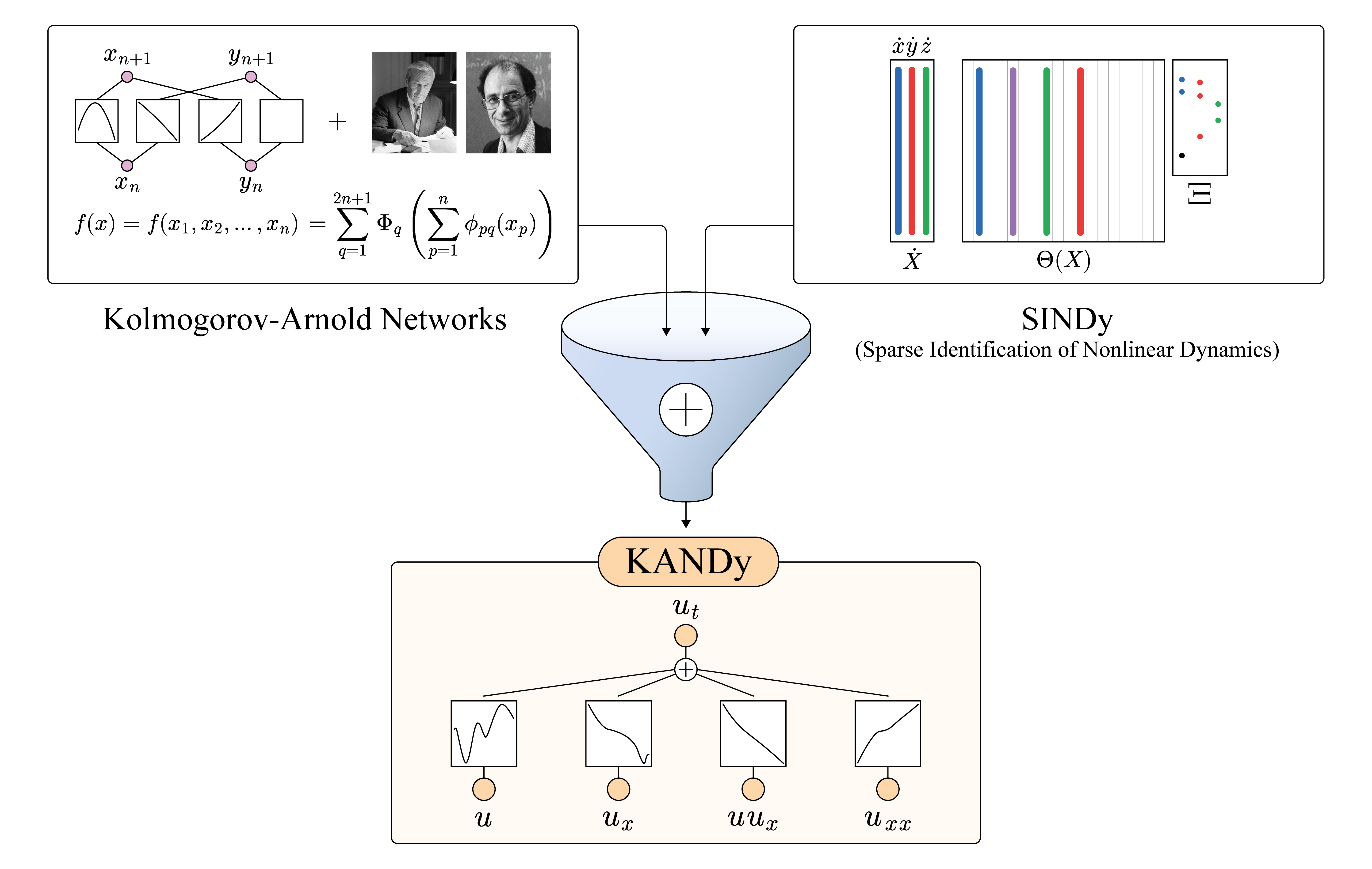
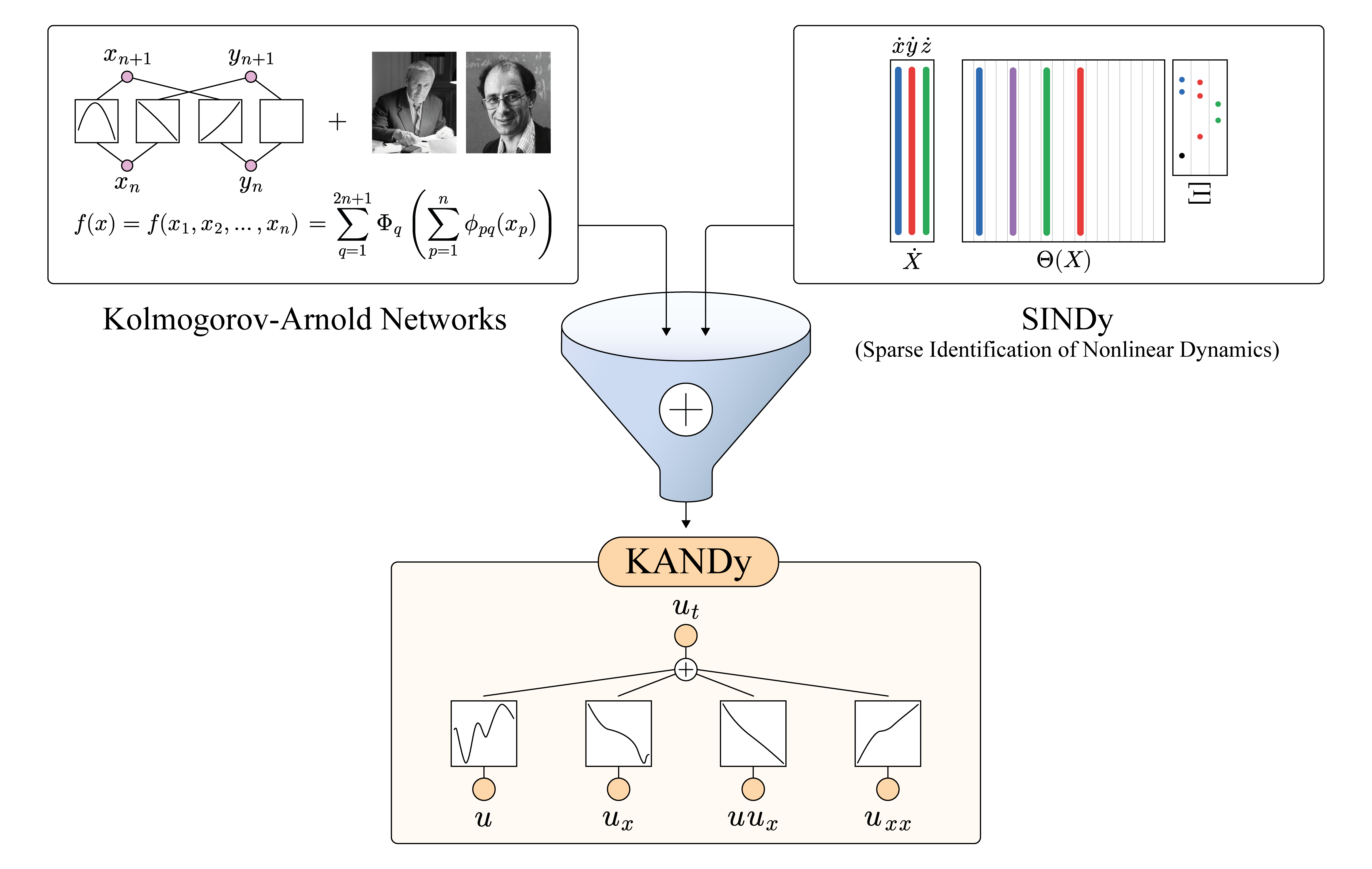
The technology, called KANDy — short for Kolmogorov-Arnold Networks for Dynamics — is designed to help scientists understand systems that are difficult to describe using traditional methods because they are noisy, nonlinear or highly unpredictable.
The majority of AI models excel at making predictions but often operate as "black boxes," offering little insight into why they behave as they do. KANDy takes a different approach. Rather than just providing the prediction of future actions, KANDy aims to understand the equations that are governing the phenomenon.
Researchers can feed KANDy data from a complex physical system, and the model attempts to identify the mathematical rules driving that system's behavior. The result is an AI model that is both predictive and interpretable.
The new framework builds on a class of neural networks known as Kolmogorov-Arnold Networks, or KANs. By adapting the technology specifically for dynamical systems, the researchers created a model capable of discovering governing equations even in cases where existing equation-discovery methods fail.
The study was conducted by Research Associate Kevin Slote and Electrical and Computer Engineering Research Assistant Professor Jeremie Fish, led by Erik Bollt, who tested KANDy on a variety of challenging problems, including discrete and continuous dynamical systems and chaotic partial differential equations. The model also successfully recovered important topological structure in a mathematical object known as the Hopf Fibration, demonstrating its ability to capture deeper properties of complex systems.
The research highlights KANDy's potential for data-driven modeling of nonlinear dynamical systems, providing scientists and engineers with a new tool for understanding complicated physical phenomena from observed data.
The study, "KANDy: Kolmogorov-Arnold Networks and Dynamical System Discovery," is currently among the most-viewed Clarkson University research papers on ResearchGate in May.
The preprint is available on arXiv.
To install the KANDy software and try it, see the installation instructions on GitHub.