Clarkson Research Helps Monitor Air Quality Aboard the International Space Station
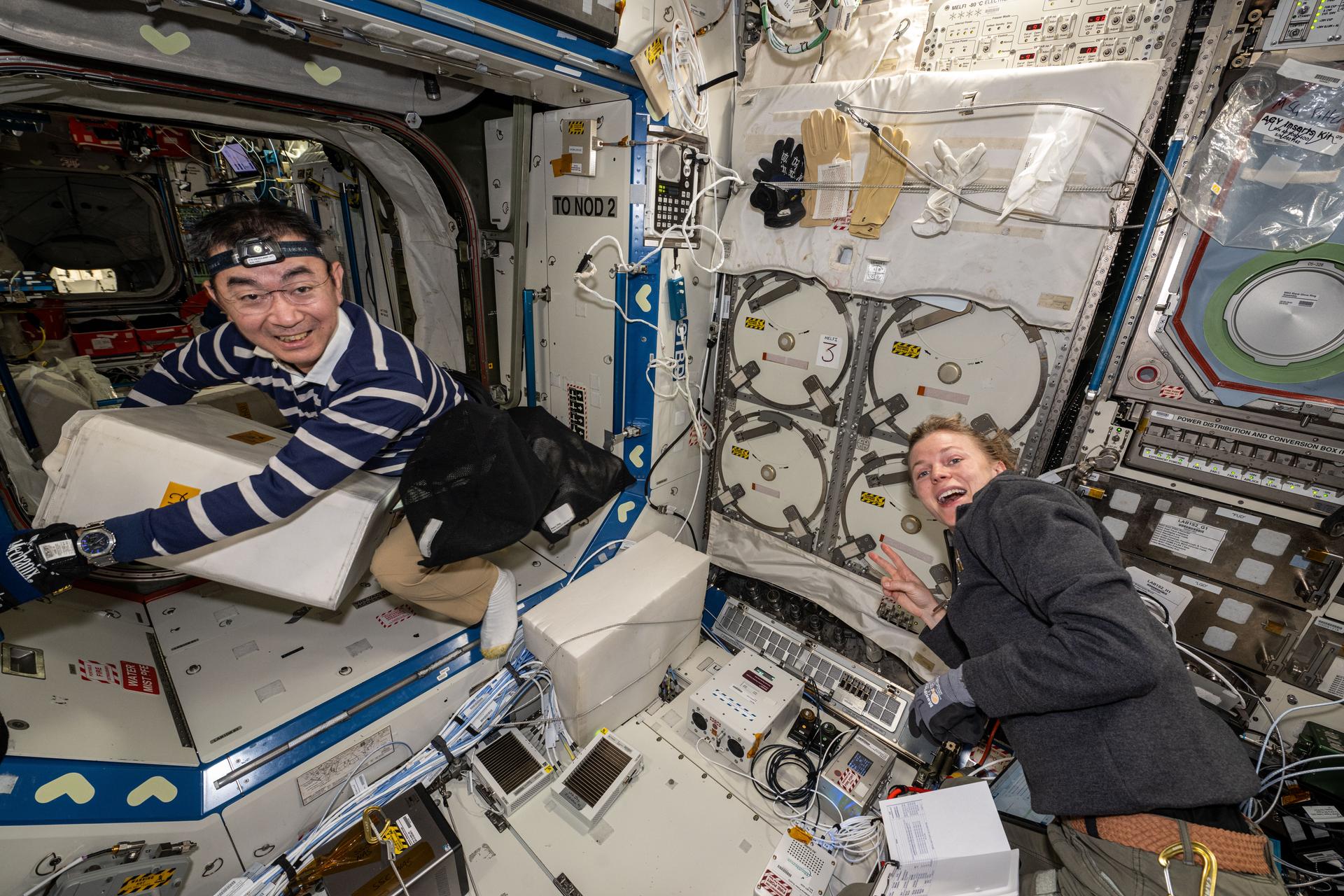
The OPto-Electrical Real-time Aerosol sensor (OPERA) developed by a Clarkson University Startup, TelosAir, in collaboration with researchers at Clarkson University and NASA’s Glenn Research Center in Cleveland was successfully deployed aboard the International Space Station (ISS) to monitor air quality. The development and deployment of the OPERA mark a significant step in robust air quality monitoring to understand potential effects to astronaut health and safety during space missions.
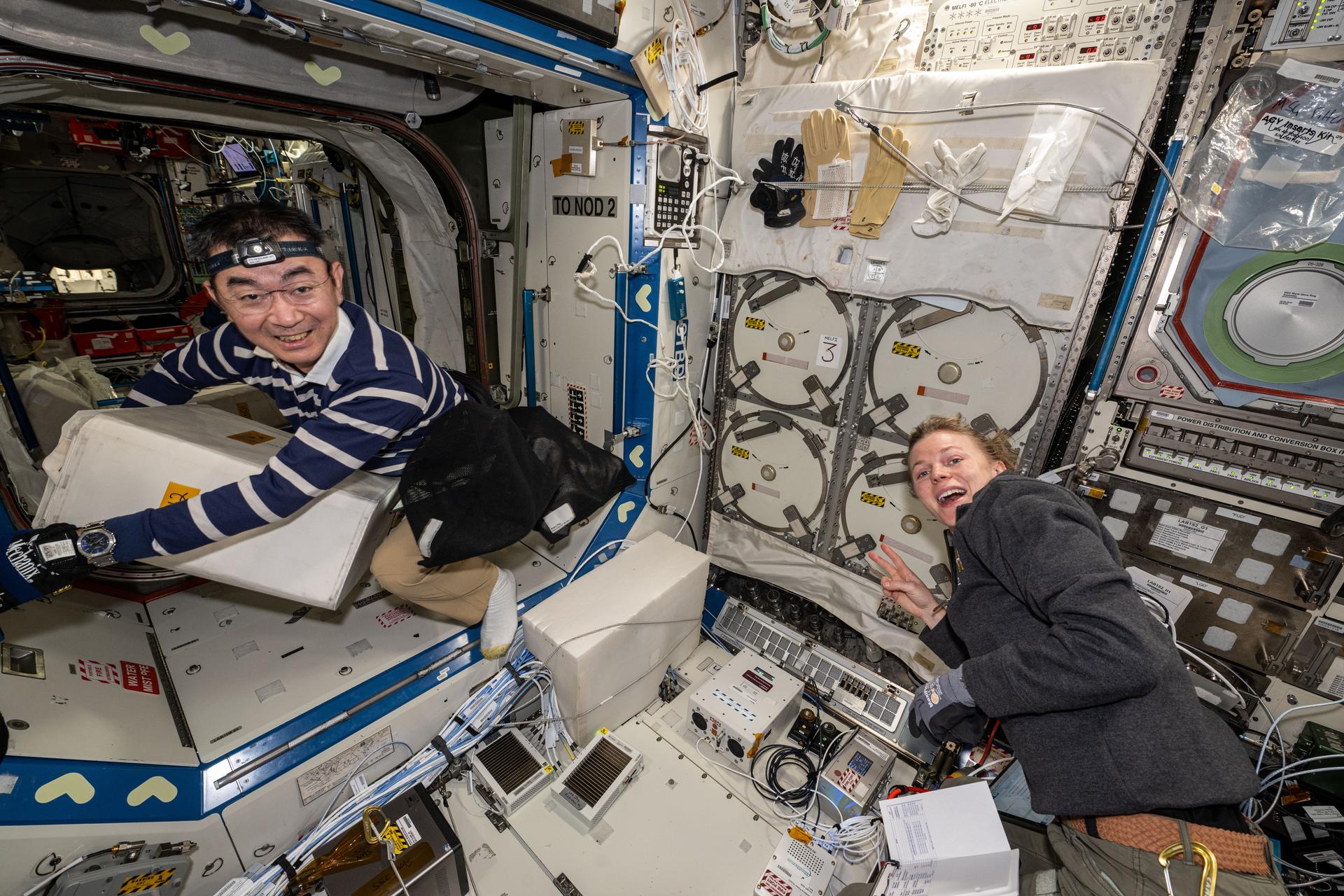
The sensor technology was developed by a team led by Suresh Dhaniyala, Bayard D. Clarkson Distinguished Professor and co-director of Clarkson's Center for Air and Aquatic Resources Engineering and Sciences (CAARES) and founder of TelosAir, with support from NASA. The system has operated aboard the ISS for seven months so far, collecting continuous data of airborne particles in the station’s microgravity environment.
Monitoring air quality in space presents unique challenges. On Earth, large particles shed from clothing, skin and other sources fall to the ground due to gravity. In microgravity, however, these particles remain suspended in the air, complicating efforts to monitor particles smaller than 10 micrometers.
“Space is a very challenging environment for air quality measurements,” Dhaniyala said. “Large particles that would normally settle on the ground stay suspended in space for long durations. These particles are typically not of health concern as they are filtered by our upper respiratory system but are of operational concern for air quality sensors. These particles clog airflow pathways in sensors and render them unusable within a few days.”
Dhaniyala’s team addressed the issue by designing a sensor system from the ground up, using a new technique of focused light scattering. This technique enabled the sensor to be compact, low-power, quiet, and operate continuously in microgravity under conditions prevalent aboard the ISS.
The Clarkson-designed system successfully operated for the full monitoring period, continuously measuring airborne particle concentrations and related properties inside the station. The data represent one of the first detailed records of particle levels in the ISS environment.
Understanding airborne particles is a priority for NASA because they can signal several potential risks. Smoke particles may indicate the early stages of a fire, which would be catastrophic in a spacecraft. Detecting smoke at extremely low concentrations allows earlier warnings and enables crews to respond quickly.
Particle monitoring also helps researchers track biological contaminants that have the potential to spread infections during long-duration missions. In addition, future lunar and Martian habitats may require sensors capable of detecting dust and other particles astronauts bring inside from planetary surfaces.
Dhaniyala’s team is also developing advanced sensor systems that could identify specific particle types—such as smoke, biological materials or lunar dust—while remaining compact and energy efficient for spacecraft applications.
The research involves collaborations between Clarkson laboratories and a startup emerging from the university’s innovation ecosystem. Undergraduate students also participate in the work, gaining hands-on experience with technologies designed for space missions.
NASA is continuing to explore future uses for the technology, including potential applications during missions to the Moon and Mars.