Clarkson Physicist Earns NSF CAREER Award to Study Light-Driven Processes in Two-Dimensional Materials
Clarkson University Associate Professor of Physics Dhara Trivedi has received a National Science Foundation award to advance fundamental research on how light interacts with atomically thin materials, work that could accelerate the discovery of next-generation semiconductors for energy, electronics and photonic technologies.
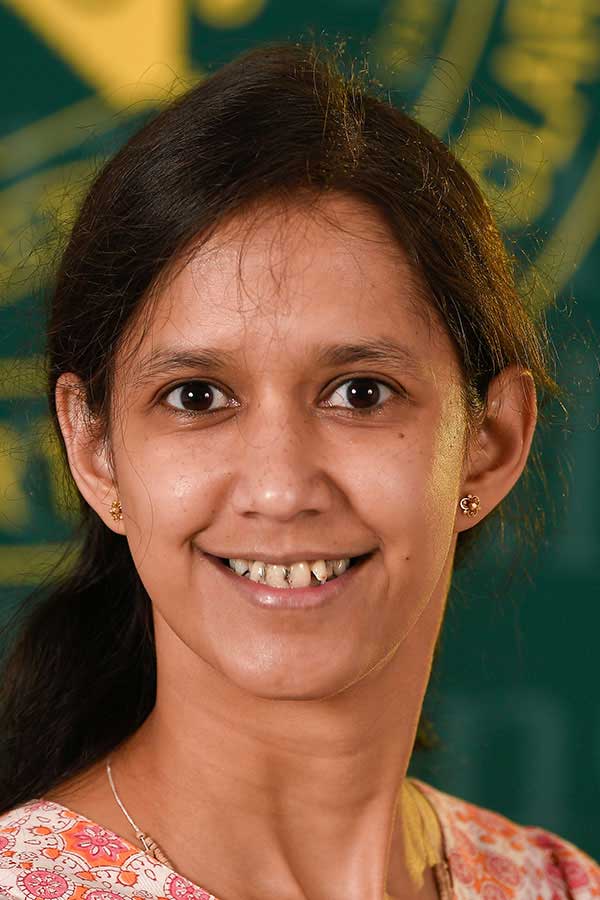
Trivedi studies two-dimensional hybrid materials, whose exceptional optical and electronic properties make them promising candidates for advanced electronics, photonics and quantum technologies.
Her CAREER project will develop new computational approaches that combine first-principles quantum mechanical simulations with artificial intelligence and machine learning to model how light generates and transports energy and electrical charges in these materials.
The project will also produce open-source software and computational materials databases to support researchers worldwide while integrating research with education. Through new coursework and the "Q-Chem Cadets" program, Trivedi will provide undergraduate and graduate students, high school teachers and students with hands-on training in computational chemistry, coding and AI-enabled materials modeling.
The NSF CAREER Award is the foundation's most prestigious award for early-career faculty. It supports researchers who have the potential to become leaders in their fields by integrating innovative research with education and outreach.
Trivedi's project, ”CAREER: Machine Learning-Assisted First-Principles Modeling of Ultrafast Photoexcitation in 2D Heterostructures”, will develop machine learning-assisted, first-principles computational methods to investigate how light generates and transports energy and electrical charges in two-dimensional materials while integrating research and education through student training, community outreach, and the development of open-source software and computational resources.