CAMP Annual Technical Meeting Connects Industry Challenges with Clarkson Solutions
For industry professionals searching for solutions to complex manufacturing and materials challenges, Clarkson University’s Center for Advanced Materials Processing (CAMP) Annual Technical Meeting offers something increasingly valuable: direct access to the researchers who may be able to help.
Held June 1-2 in Clayton, NY, the 2026 CAMP Annual Technical Meeting brought together leaders from aerospace, construction, medical technology, semiconductors, advanced manufacturing and academia to exchange ideas, present emerging technologies and build new partnerships.
CAMP, a New York State Center for Advanced Technology, was created to connect industry with university research expertise. Through collaborative research projects, the center helps companies improve products, solve manufacturing challenges, develop new technologies and strengthen their competitiveness.
“This is a fantastic opportunity for New York State companies from all types of industries — aerospace, medical, semiconductor, construction and more — that have needs to develop, understand and manufacture advanced materials to learn from experts in the field at Clarkson,” said CAMP Director Devon Shipp.
Throughout the meeting, industry representatives presented their toughest challenges to researchers, often hoping to spark future collaborations.
AI Draws Broad Interest
One of this year’s most engaging sessions focused on artificial intelligence.
Led by Clarkson faculty, the session generated significant discussion and attracted professionals from well beyond chemistry and materials science.
Engineers from mechanical and civil engineering, mathematicians and other technical professionals joined conversations on topics including robotics, air quality sensing technologies and grain orientation mapping.
The session showcased CAMP’s ability to introduce emerging technologies that may shape the future of manufacturing and materials development.
“We try to look for something that is more cutting edge, more modern areas,” Shipp said of the key topics selected for the meeting. “It’s mostly dictated by companies we interact with, or companies we want to interact with.”
Different Industries, Shared Problems
For Don Streeter, vice president of the New York Construction Materials Association, the meeting offered an opportunity to discuss a major challenge: sustainability and decarbonization.
His industry is focused on improving the durability and service life of construction materials while reducing environmental impacts.
But solutions do not always come from within a single field.
“The thing that I have learned over the years in dealing with the research community is that you just need to share the problems that people have, and someone from a completely different field might have a solution to the problem that you’re looking to take care of,” Streeter said.
That cross-disciplinary problem solving is one of CAMP’s greatest strengths.
“Just being able to share what my industry is struggling with, with researchers who have a completely different perspective on it, can turn out to be beneficial,” he said.
Trust, Collaboration and Economic Impact
According to Shipp, creating those connections is the primary purpose of the annual meeting.
“The primary reason for this conference is to bring people from industry and academia together to exchange ideas, surface problems and see who can help solve those problems,” he said.
The event is about more than exchanging business cards.
“Getting together is about getting to know each other, building trust,” Shipp said. “When companies work with universities, they need to be able to trust the research that’s done and the fact that students are not only going to do the right thing, but also that the data is going to be good and it’s a good investment from the company’s perspective to engage with the university.”
The benefits extend well beyond a single project. Companies gain access to expertise and research capabilities. Universities gain insight into real-world industry challenges. Research funding supports student education and workforce development.
“This is a huge difference maker,” Shipp said.
Building Better Materials for Augmented Reality
Abraham Jordan, principal engineer at the Rochester-based company Vuzix, attended the meeting looking for potential research partners who could help advance the next generation of augmented reality technology.
Vuzix develops augmented reality glasses and headsets that rely on waveguides — optical structures embedded in lenses that allow digital images to be overlaid onto a user's field of view.
Improving those systems depends heavily on advances in materials science.
Jordan explained that increasing the refractive index of the materials used in waveguides could lead to larger fields of view and higher-performing devices. Achieving that goal will require both new materials and new manufacturing approaches.
“We are pretty proud of the work we do and the materials, and we are really excited about them,” Jordan said. “But we understand that we don’t know everything about them.”
Through CAMP, Vuzix hopes to connect with researchers who can help improve material performance, reduce manufacturing costs and explore entirely new classes of optical materials.
“We would like to interact with researchers and academics who have a larger bandwidth of knowledge to really try to develop new materials and push the frontier of our optical materials now into stuff we don’t have access to yet,” he said.
Where the Real Conversations Happen
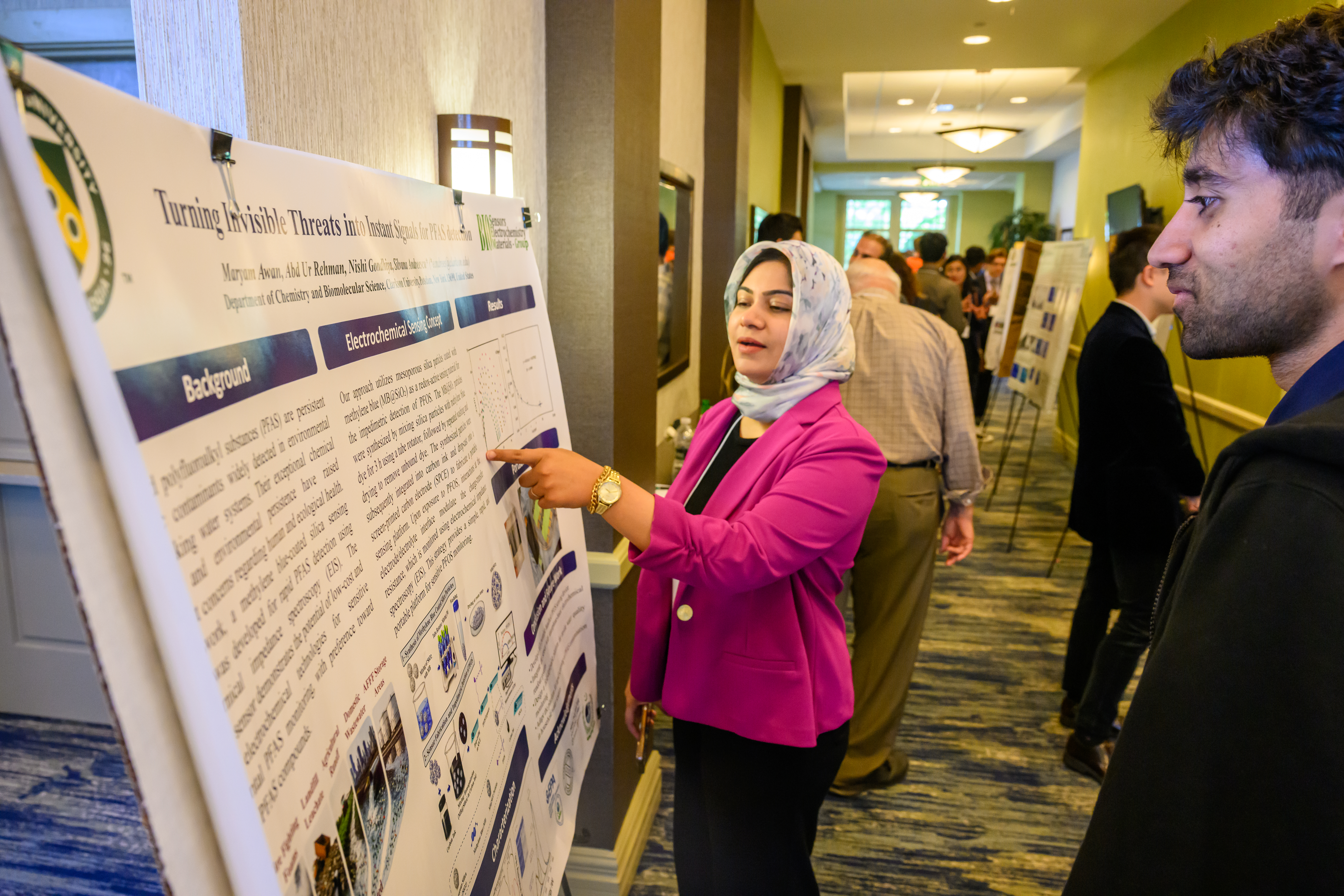
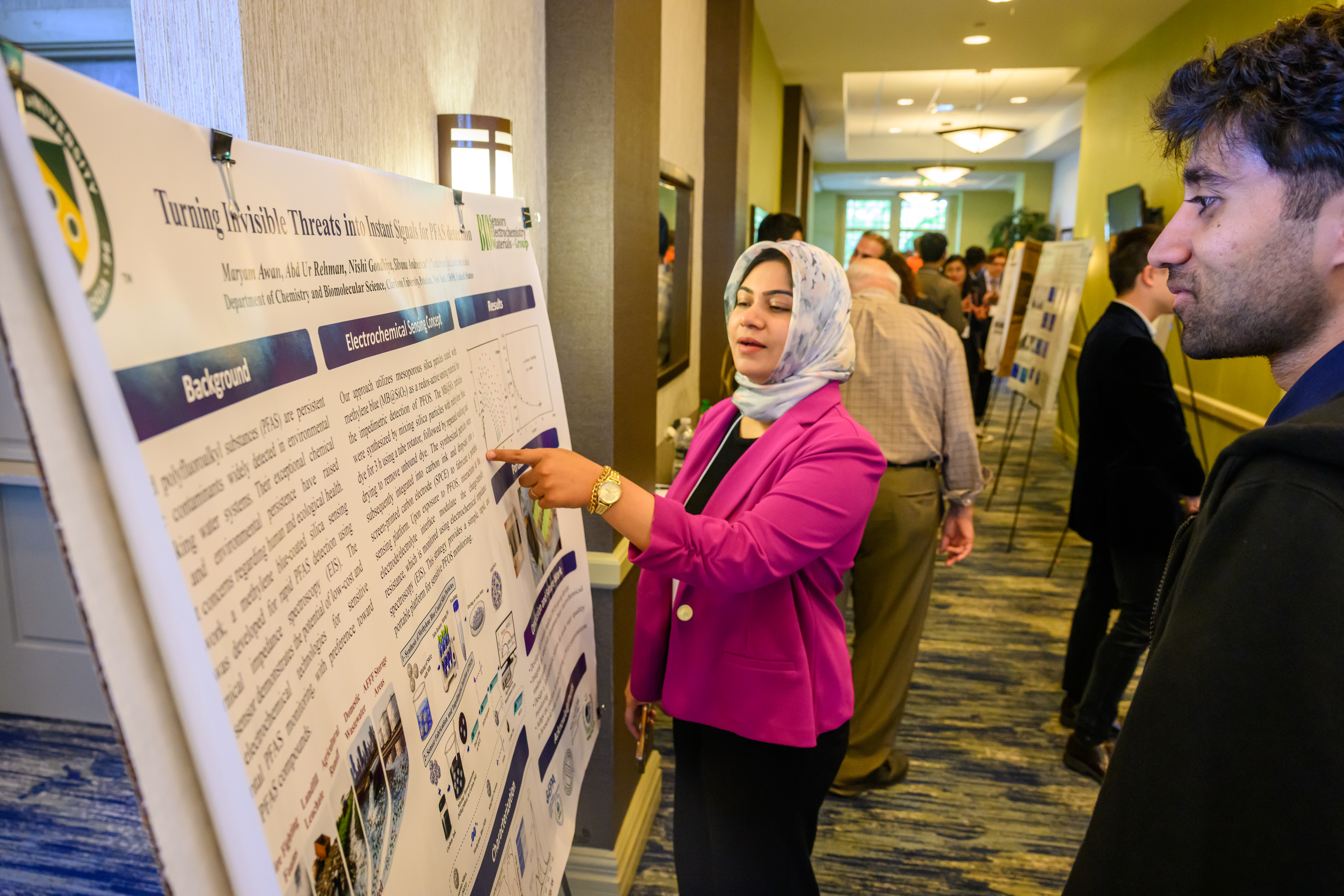
While the technical presentations provided a broad overview of ongoing research, many attendees pointed to the student poster session as the highlight of the event.
“The poster session is fantastic because this is where the business representatives really get a lot more detail,” Shipp said.
Students and researchers were able to discuss their projects one-on-one with industry professionals, creating opportunities for deeper conversations and potential future partnerships.
“The students are enthusiastic about presenting their work,” Shipp said. “The poster session is really where you see the majority of the exciting stuff happen.”
Honoring a Lifetime of Clarkson Dedication
This year’s meeting also featured a special recognition of Professor Richard “Dick” Partch, whose contributions have helped shape CAMP for decades.
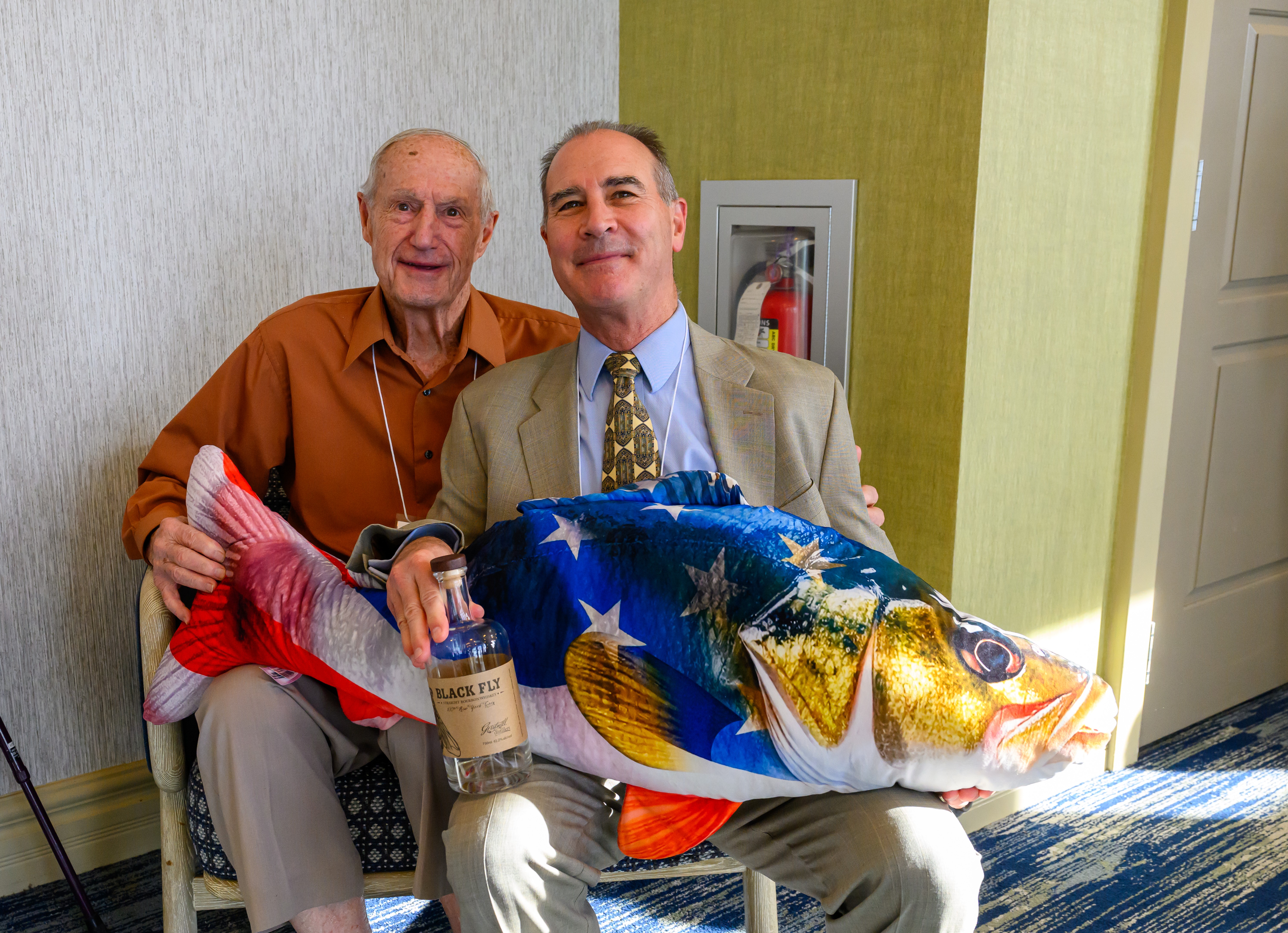
Partch was celebrated for more than 60 years at Clarkson University and has been involved with CAMP since its earliest days.
“Basically since the inception of CAMP, he’s been a mainstay,” Shipp said.
Colleagues recognized Partch's long-standing commitment to both research and industry engagement, highlighting the role he has played in building relationships between Clarkson and companies throughout New York State.
His legacy serves as a reminder of the collaborative spirit that continues to define CAMP today.
As industry challenges become increasingly complex, CAMP remains focused on creating the partnerships needed to solve them — bringing researchers, students and companies together to advance technology, strengthen businesses and contribute to economic growth across the region.