Image

Psychologists study the workings of the mind and how and why people do the things they do. Psychology also unlocks a wealth of career possibilities, from a job in health sciences or healthcare to a leadership position in the boardroom. A Bachelor of Science in Psychology from Clarkson gives you an edge in any profession requiring you to work with people, understand them, solve problems, think critically and communicate.
At Clarkson, you won't just study psychology. You'll dive into it. Internships, research and other hands-on experience are an integral part of the program. Every psychology student spends at least one semester participating in a professional experience. Some students work alongside mental health professionals or school psychologists. Others volunteer for nonprofit groups or assist faculty with research.
You'll get to know those faculty really well during your time at Clarkson. Our low student-to-faculty ratio ensures you'll be more than a face in the crowd. Your professors will become trusted advisors as you build your plans for the future.
Many of our professors choose to work here because our department lets them balance teaching in their area of expertise with maintaining an active research program. You benefit from that, too. Since there are no graduate students in the department, faculty train and mentor undergrads to provide the research assistance they need in their lab.
Psychologists study the mind and behavior. Your classes at Clarkson will approach the topic from multiple perspectives, from understanding the workings of the brain to examining how people relate to each other and society as a whole.
Some of the classes you can take include:
For more information, view the course catalog for current program requirements, course numbers and credit hours
The psychology program consists of 32 credit hours in psychology and 9 credit hours in mathematics. 49 credit hours are in free electives, which is enough to complete a minor or second major if you so choose.
All courses are 3 credits unless noted.
The following courses are required for all students, irrespective of their program of study. These courses are offered during the fall semester, with FY100 First-Year Seminar being required of only first-year students. Both FY100 and UNIV190 are typically taken during the fall semester of the first year at Clarkson.
FY100 First-Year Seminar (1 credit)
UNIV190 The Clarkson Seminar (3 credits)
Students must complete three of the following courses:
Educational Psychology
Neuroscience and Society
Diversity Science
Organizational Behavior
Human Sexuality
Cyberpsychology
The Psych of Psychoactive Drugs
Consumer Behavior
Current Readings in Animal Behavior
Dir. Res./Psychophysiology
Behavioral Ecology & Sociobiology
Qualitative Research Methods
J&DM for Biomedical Sciences
Developmental Psychology
Adult Development and Aging
Prenatal, Infancy, and Child Development
Counseling Psychology
Mental Health Professional Experience
D.S. in Psychology
D.S. in Social Psychology
D.S. in Physiological Psychology
Dir. Res./Cultural Psychology
Dir. Res./Health Psychology
Dir. Res./Cognitive Psychology
Dir. Res./Social Psychology
Dir. Res./Clinical Psychology
Thesis/Dissertation in Psychology
Perception
Biological Psychology
Cognitive Neuroscience
Neurobiology
Animal Learning and Cognition
Human Cognitive Evolution
Learning and Memory
Judgment and Decision Making
Community Psychology
Abnormal Psychology
Health Psychology
Clinical Psychology
Personality Psychology
Motivation and Emotion
Cultural Psychology
Advanced Topics in Social Psychology
Mathematics
Students must complete three courses in mathematics (MA) numbered 100 or above, including one calculus and one statistics course for a total of 9 credits.
Knowledge Area/University Course Electives
Students will have at least 15 credit hours available to use toward Knowledge Area and/or University Course electives to satisfy the Clarkson Common Experience requirements.
Free Electives
Students will have approximately 49 credit hours available to use toward courses of their choice.
Real-world experience is the hallmark of a psychology degree at Clarkson. If you're interested in clinical experience, you might find an internship or co-op at the Ogdensburg Mental Health Clinic, St. Lawrence Health's Chemical Dependency unit, The Arc New York, Renewal House or the Reachout crisis hotline. Students also have internships at national organizations like Accenture.
You could also find an opportunity at a local business or inside Clarkson's human resources office or even design your own.
Learn more about career development and internships at Clarkson.
Psychology students regularly travel to national and international conferences, where they present research. Often, that work is conducted with our faculty members. We encourage students to find faculty with similar interests and collaborate on projects; you could even publish your work as a research article.
Our faculty research interests include:
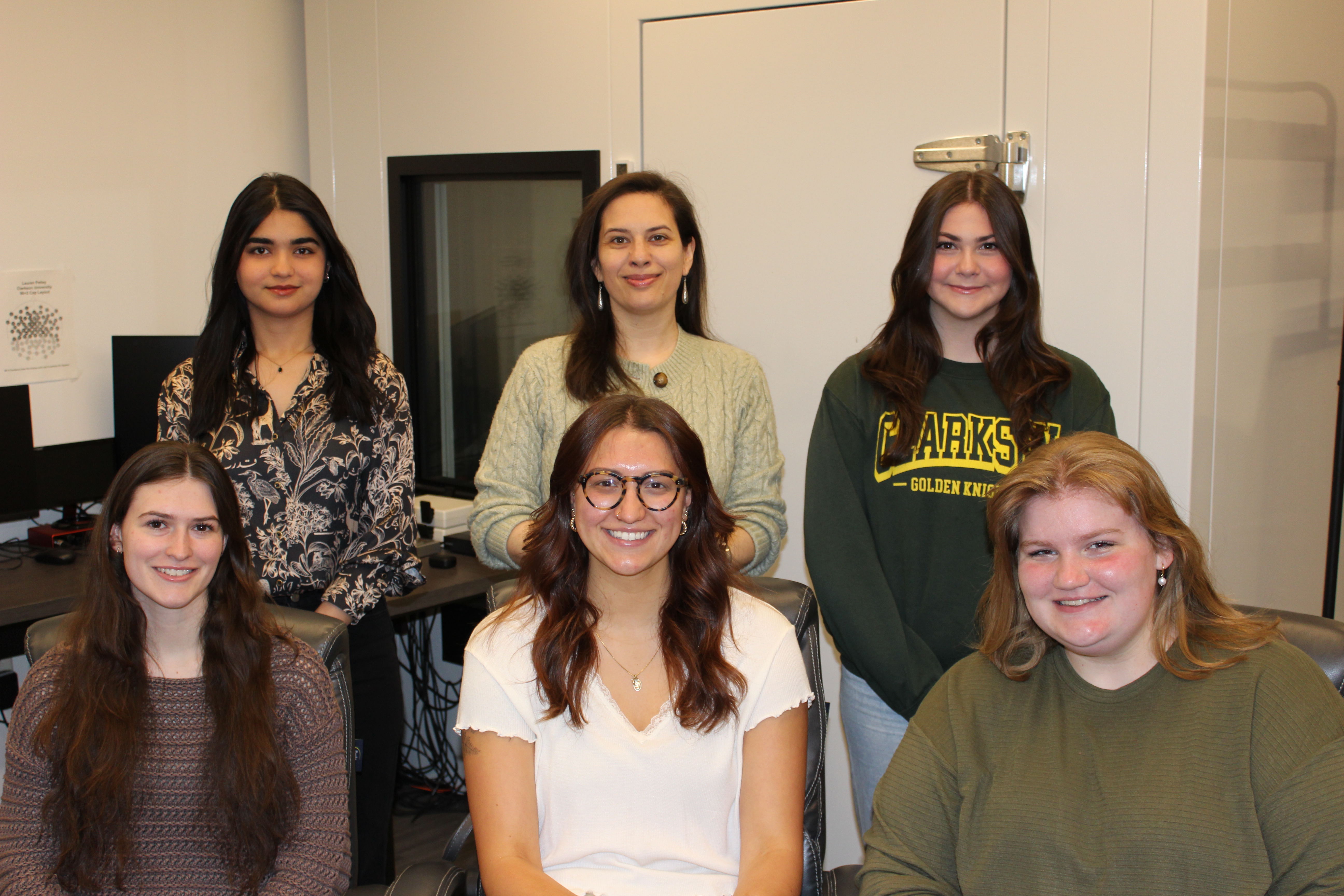
Attentional control supports our everyday functioning in myriad ways. Without it, we
would lose our capacity to complete difficult tasks, and our behavior would be
dominated by reflexive actions. Yet the study of attention is dominated by visual
research, limiting our understanding of its multisensory nature, and access to cognitive
testing for the visually impaired. After successfully developing an auditory version of the
classic Flanker task, we’ve incorporated it into an auditory Attention Network Test – the
first of its kind to successfully measure the three brain networks that are targeted by this
task.
In the MEL, we explore what motivates people to grow, learn, connect with others, and
act on their values. Drawing primarily on self-determination theory, we study how
autonomy, psychological need satisfaction, and internalized motivation shape wellbeing,
education, prejudice reduction, social justice engagement, and prosocial behavior. A
central theme of is to understand how people move beyond external pressure or
compliance to genuinely embrace values as part of who they are. Ultimately, our
research seeks to translate motivational science into environments and practices that
help people become more autonomous, engaged, socially responsible, and capable of
meaningful change.
Examples of recent student research projects include:
We explore youths’ ability to identify, organize and recreate clumped, dispersed and
random spatial patterns. Our recent research finds that many adolescents naturally
misinterpret random patterns, but their understanding improves following targeted
instruction. These findings provide new insight into how pattern perception develops
throughout childhood and adolescence and suggest that statistical reasoning can be
strengthened through simple educational interventions.
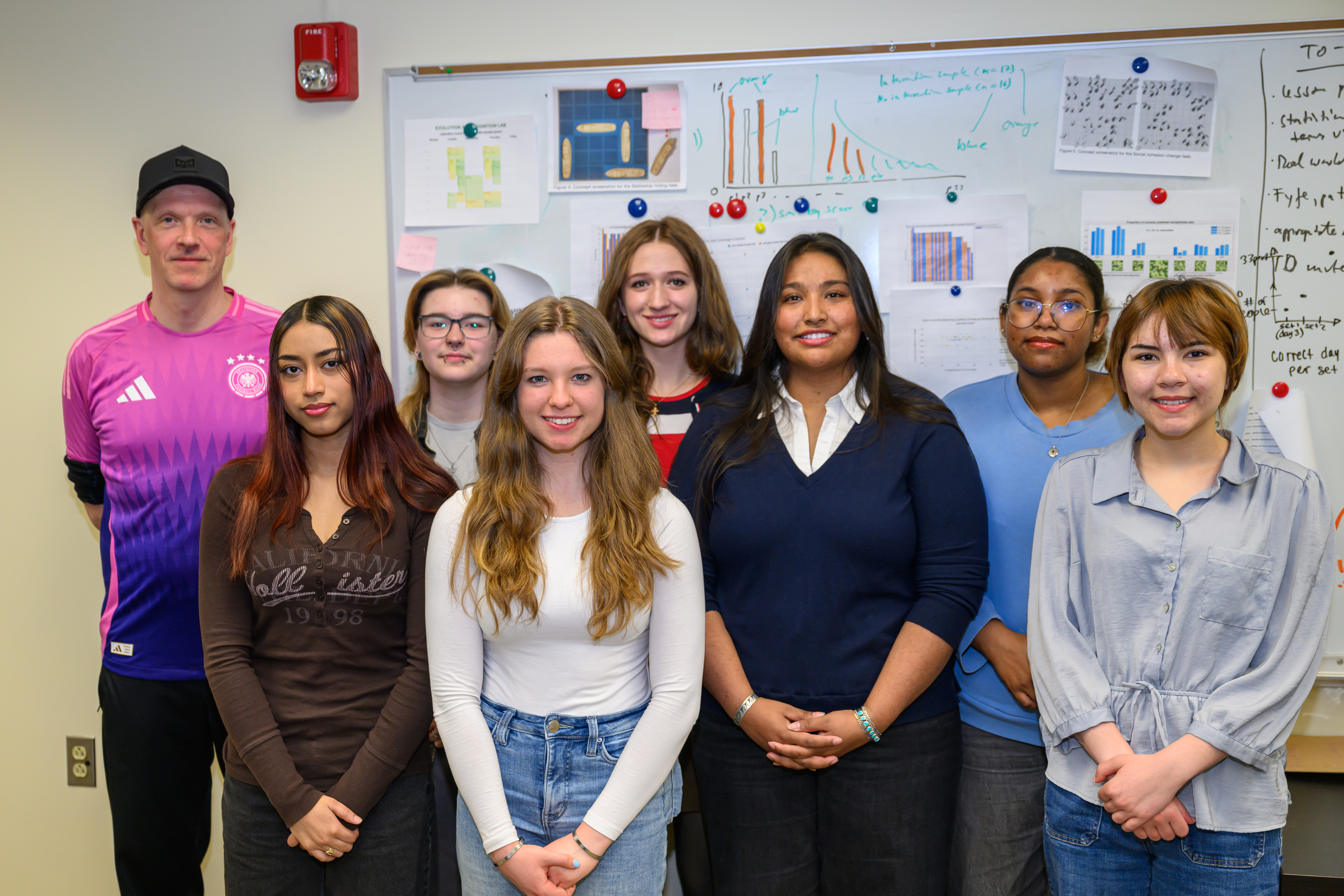
The CFCD Lab examines how family, cultural, and social experiences shape
development, relationships, and well-being. Undergraduate students are actively
involved in research projects and gain hands-on experience with different stages of the
research process, from developing research questions and reviewing literature to
analyzing data and presenting findings at conferences.
Examples of recent student research projects include:
Psychology minors develop the critical skills of problem-solving and communication. These skills include being able to formulate a problem; acquiring the information needed to solve the problem, either through researching the existing literature or designing methods to collect new data; analyzing and interpreting the information; integrating the information and applying it to the problem; and communicating the solution to others.
All courses are 3 credits unless noted.
Psychology Minor Core Requirements (18 credits)
Students are required to take of the following courses:
PY151 – Introduction to Psychology AND
Any 5 Psychology (PY) 3 credit courses numbered 200 or above (only one of which can be the directed research or internship).
To understand human cognition, social behavior and social organization, you need a background in multiple disciplines. This minor provides a foundation in biology, psychology and social science, so you can join the discussion. Learn more about the biology, behavior and society minor.
Study the mechanisms that guide processes like attention, memory, perception and emotion. This minor is ideal for students interested in clinical health careers, such as medicine, physical therapy, clinical psychology and neuropsychology. Learn more about the cognitive neuroscience minor.
We offer several classes aimed at psychology majors interested in health science careers. Choose any six of these to complete this concentration:
A psychology degree can take you in many directions. If you're interested in pursuing a career in the health sciences or healthcare, we'll work with you to ensure you're going the right way. Each semester, faculty advisors will help you choose classes and activities that can make it easier to get into graduate programs. The departmental psychology curriculum is so flexible that it provides an ideal starting point for students who want to double major (e.g., degrees in psychology and healthcare, or psychology and biology) within their regular course load.
Available advising tracks include:
Clarkson has established multiple professional partnerships with local psychiatric and mental health facilities to give our undergrads the rare opportunity to observe — and conduct — clinical work and supportive care in professional and community-based settings. Throughout an entire semester, participating students will spend a full day each week (or the equivalent) at one of our local partner sites, working with psychiatrists, psychologists, social workers, peer support staff and other members of mental health teams. These students will encounter a wide range of conditions and concerns and may have the opportunity to work with children and adolescents, adults and sexual offenders.
Few, if any, undergraduate psychology programs offer students this level of professional immersion and clinical experience.
Participating students may observe and be involved in numerous forms of intervention and support, including:
At the internship sites, students will not only observe professionals and support staff providing care and discussing treatment and intervention plans, but they will also have the opportunity to be directly engaged in clinical and support activities while receiving support and feedback from professionals and Clarkson faculty.
More about our professional partnership with the St. Lawrence Psychiatric Center
How has natural selection shaped our behavior? How does social pain affect our mental and physical health? How does motivation affect social perceptions, relationships and behavior? Our faculty ask these and other questions in our specialized labs — and so will you.
Labs include:
Gracie DeLaBruere's research in Clarkson's Evolution and Cognition Laboratory took her off-campus this summer — more than 3,000 miles away, to be exact. She accompanied a faculty member and three other students to Berlin, where they collaborated with researchers on an NSF-funded project.
“To be able to work alongside professors and develop research skills wasn’t something that I thought I would be able to do before graduate school, but Clarkson made it happen,” she says.
For students interested in healthcare and health sciences, a psychology degree from Clarkson can help you make a real difference to patients. As the pandemic upended our lives, the importance of mental health training became evident. Psychology provides a vital introduction to that practice. Psychology is the top choice for students who want to pursue simultaneous training in (mental) health science and healthcare and graduate with two, rather than one, degrees.
But, a degree in psychology also opens doors to fields like teaching, law and human resources — all of which are expected to have above-average growth in the next decade, according to the U.S. Bureau of Labor Statistics.
Some careers you might pursue include:
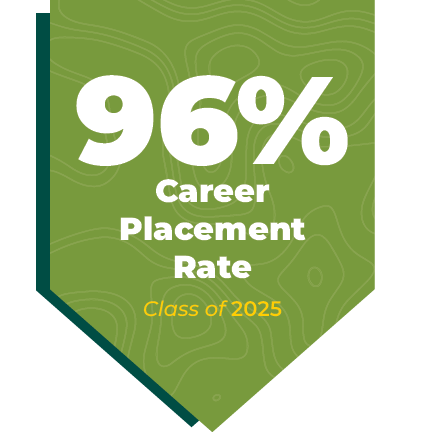
Our graduates have found that their skills are in high demand. The Clarkson Undergraduate Class of 2025 had a 96-percent placement rate. Pschology graduates interested in applying their knowledge of human behavior have recently gone on to work at places such as:
Our recent graduates have continued their educations at many institutions, including:
Meet some of the psychology students and faculty of Clarkson University, and find out more about their research and what they think of the program.
Clarkson's psychology program gives undergrads experience they can't find anywhere else and also works great as a double major with other Clarkson majors. Find out more today.