Chemical & Biomolecular Engineering Department
Our Programs
Undergraduate Programs
Graduate Programs
96% Placement in 1st Six Months
Hidden Gem
with the
Highest Paid Alumni
College Gazette
Clarkson University students are highly sought after and our placement rates and early career salaries (on average over $82K for undergraduates) prove it. Each year, our award-winning Parker Career Center hosts two career fairs, bringing in top employers from across the country to Potsdam to recruit our students for internships, co-ops and full time employment.
According to PayScale, the average chemical engineer's salary is currently above $70,000 with the highest being $80,000. A bachelors degree in chemical engineering from Clarkson starts graduates out strong.
16%
of students decide to continue their education in various post secondary programs.
2%
of our graduates seek alternative positions like the military.
Department Spotlights
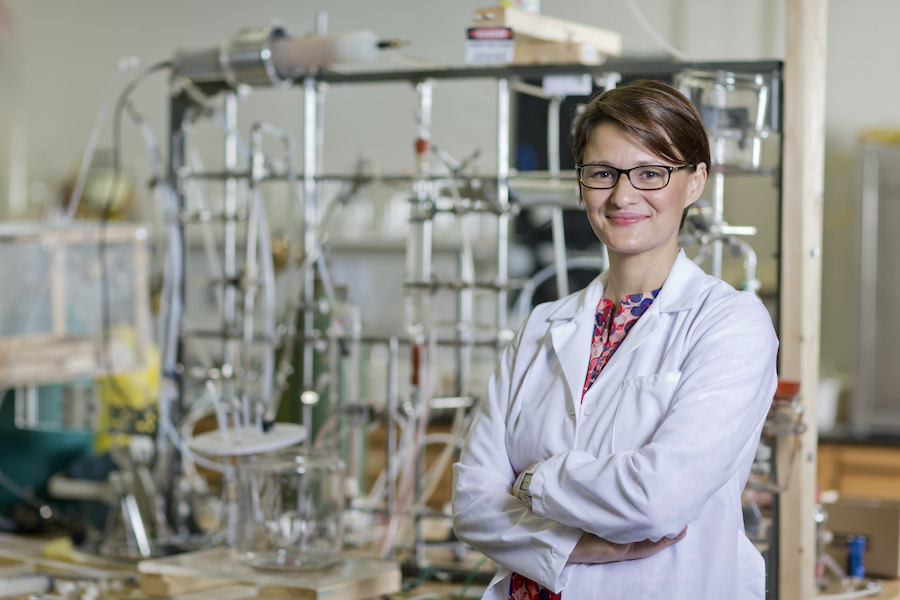
Professor Selma Mededovic
- Professor Selma Mededovic leads a new National Science Foundation Award for the destruction of "forever chemicals" by plasma. The project is Collaborative Research: ECLIPSE-PFAS: Electrical Discharge Plasma-Driven Multidisciplinary Approach for Complete Mineralization of PFAS & PFAS Precursors in Complex Aqueous Systems. This is a team effort with Co-Principle Investigator, Tom Holsen, at Clarkson.
Professors Simona Liguori and Taeyoung Kim
Received Department of Energy awards, one for the study of hydrogen membrane separation to aid renewable hydrogen and the other for nutrient capture from waste waters.

Professors Simona Liguori, Selma Mededovic Thagard, and Ross Taylor
- Professors Simona Liguori receiving a 5 yr service award, Selma Mededovic Thagard receiving a 15 yr service award, and Ross Taylor acknowledged for an incredible 45 yr service award!
Faculty Award Spotlight
Dr. Simona Liguori
Dr. Liguori’s new DOE award investigates a new avenue to produce clean and renewable hydrogen from biomass gasification, as well as hydrogen separation, through use of novel membranes.
Dr. Taeyoung Kim
Dr. Kim’s new US Bureau of Reclamation award investigates a unique water desalination approach to use less energy to produce clean, fresh water.
Student Awards
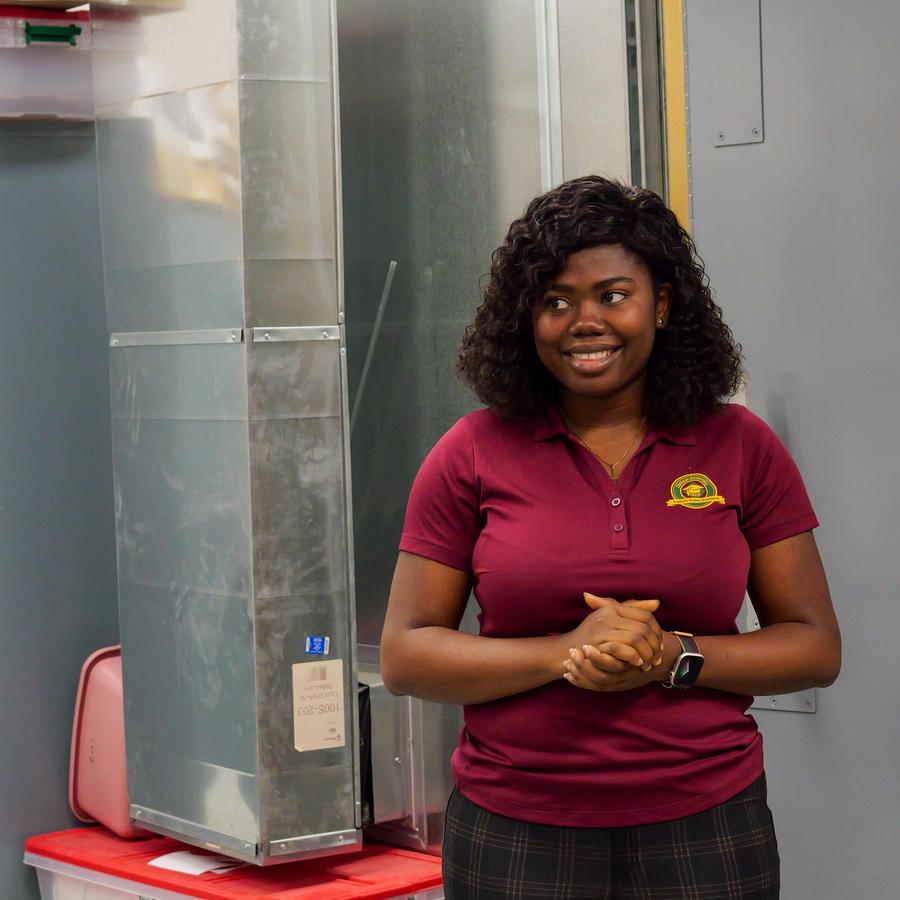
Faith Isowamwen
Best Poster award, SPIE AL 23 Advanced Etch Technology and Process Integration for Nanopatterning XII conference
(Advisor: S. Mededovic Thagard)

Mohammad Hasibul Hasan
Kokes Travel Award to attend the North American Catalysis Society
(Advisor: Ian McCrum)
Research & Facilities
Our research and lab facilities are state-of-the art and unique. Our undergraduate education is supported by a 9-inch diameter glass-walled continuous distillation column, equipped with twelve stainless steel sieve trays, a steam-heated partial reboiler, and a vented total condenser, a 20-liter batch distillation column, a packed bed column, a forced circulator double effect evaporator system, a pilot-scale mixing unit, a reverse osmosis water desalination system, and a supercritical fluid extractor. In addition to research resources at the Clarkson Centers, the faculty maintain an x-ray fluorescence system, direct-in-liquid plasma reactors, reactors with specialized catalytic metallic membranes, an analytical differential electrochemical mass spectroscopy (DEMS), potentiostats/galvanostats, bioreactors, an atomic force microscope (AFM), a chemical mechanical planarization (CMP) tool and more.
Undergraduate Highlights
GlobalFoundries Visit
The Clarkson student chapter of the American Institute of Chemical Engineers (AIChE) visited GlobalFoundries recently at their Essex Junction, VT site. Hats off to our undergraduate students, Lyle Trimbal, AIChE president, and James Molinski, AIChE vice president, who helped plan the event along with Will Dumont, a Clarkson student who has interned with GlobalFoundries. Many thanks to Zachary Zelinski at GlobalFoundries for a wonderful tour!
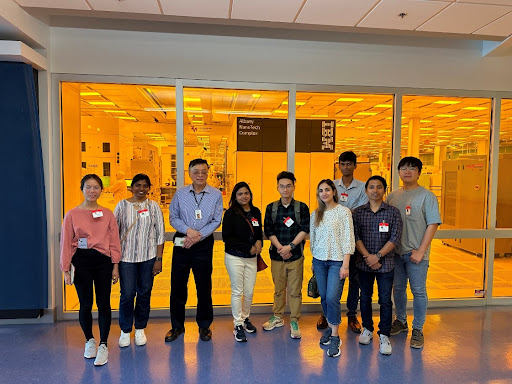
Student Visits to Local Industry
Dr. Jihoon Seo lead a group visit to IBM where undergraduate and graduate students were able to see actual work environments for chemical engineers.
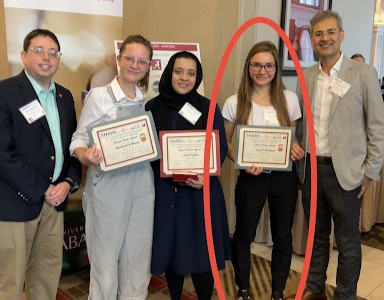
Lauren Olesky wins 3rd place Best Poster Award at the NAMS Conference
Undergraduate student Lauren Olesky won third place in the student poster awards at the 2023 North American Membrane Society (NAMS) conference in Tuscaloosa, Alabama. She also won the Dreyfus-Baltus travel award and the NAMS Undergraduate Student Travel Award. (Poster title: "Synthesis of Zinc Chloride Membranes for Potential Ammonia Separation;" Authors: Lauren Oleksy, Moses Adejumo, and Simona Liguori)
A Trip to Chobani
Clarkson chemical engineering undergraduate student Abi Mortimer '26 recently set up a trip for several chemical engineering students to visit the Chobani Plant in Central New York.


Recent Faculty Publications
Professor Selma Mededovic Thagard and her team recently published a paper in the Chemical Engineering Journal entitled: “Caffeine degradation in a plasma-liquid reactor with the lateral liquid flow: Elucidating the effects of mass transport on contaminant removal.” The team identified phenomena to design, control and operate efficient plasma reactors for water treatment using caffeine degradation as a model contaminant. As caffeine is destroyed at the plasma-water interface a diffusional flux is created to drive the caffeine towards to the surface to be further destroyed. The implications to extend these results to other organic contaminants is immense.